
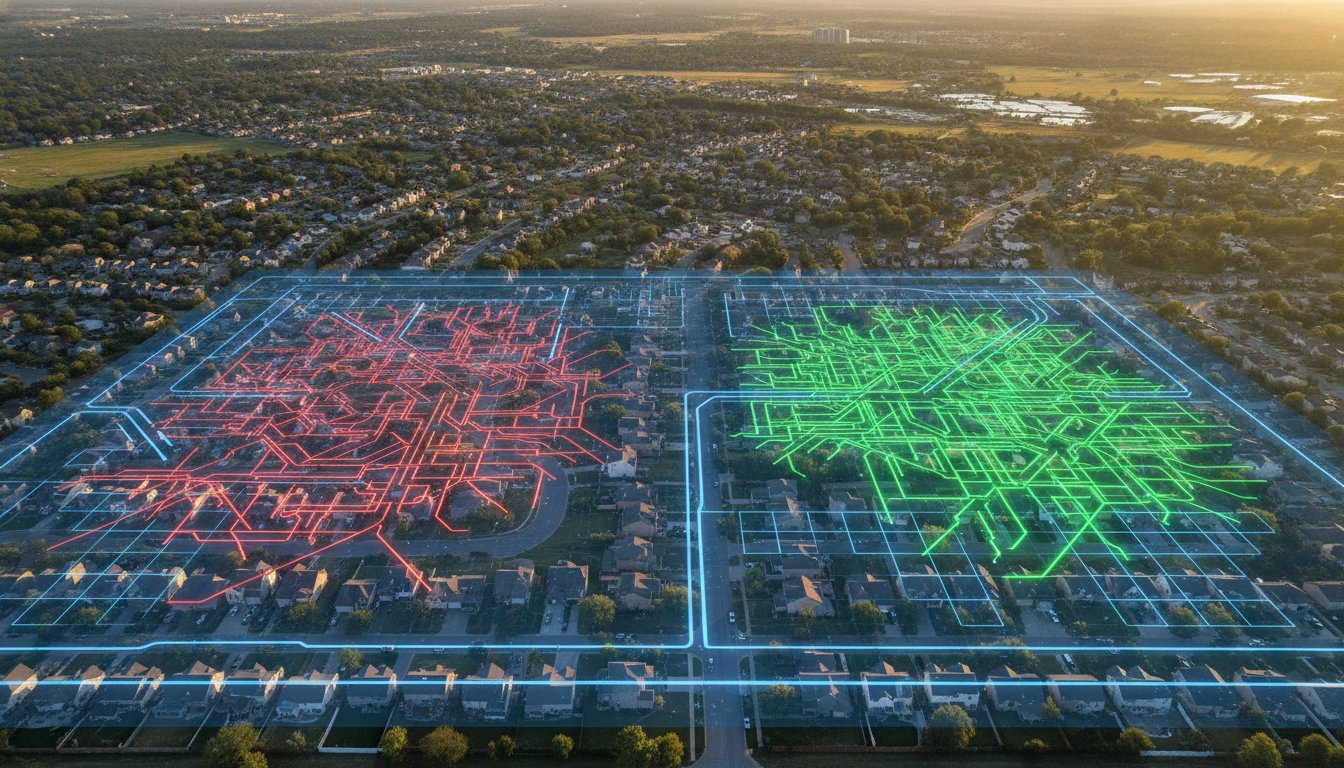
The middle ground in this industry is dead. You're either scaling into a regional powerhouse or you're being sized up for an acquisition. As private equity groups aggressively hunt for recurring maintenance revenue, landscaping business consolidation is no longer a distant trend; it's your current reality. National platforms are poaching accounts. Labor costs are sitting at an average of $17.12 per hour. If your routes aren't tight, your margins are bleeding into the pavement.
It's exhausting to fight for profitability when the rules of the game are shifting. We understand the logistical strain of rising overhead and the uncertainty of your company's true valuation. This article analyzes the 2026 M&A drivers to help you decide your next move. You'll learn how to optimize route density to compete with the giants or prepare your books for a high-value exit at a 3x to 6x EBITDA multiple. We'll examine the tactical trends you need to master to ensure your business remains an asset; not a liability.
Key Takeaways
- Navigate the 2026 landscaping business consolidation by choosing to either scale into a regional leader or exit profitably.
- Prioritize route density over raw revenue. A smaller, concentrated business often nets more than a massive, scattered one.
- Use route trading to eliminate logistical outliers. Stop wasting fuel and labor hours on accounts that don't fit your core service area.
- Prepare for a high-value acquisition by standardizing your processes and cleaning up your P&L long before you list the business.
- Protect your territory from national platforms by adopting a "density-first" growth strategy that maximizes your local operational efficiency.
The 2026 Landscaping M&A Landscape: Drivers of Consolidation
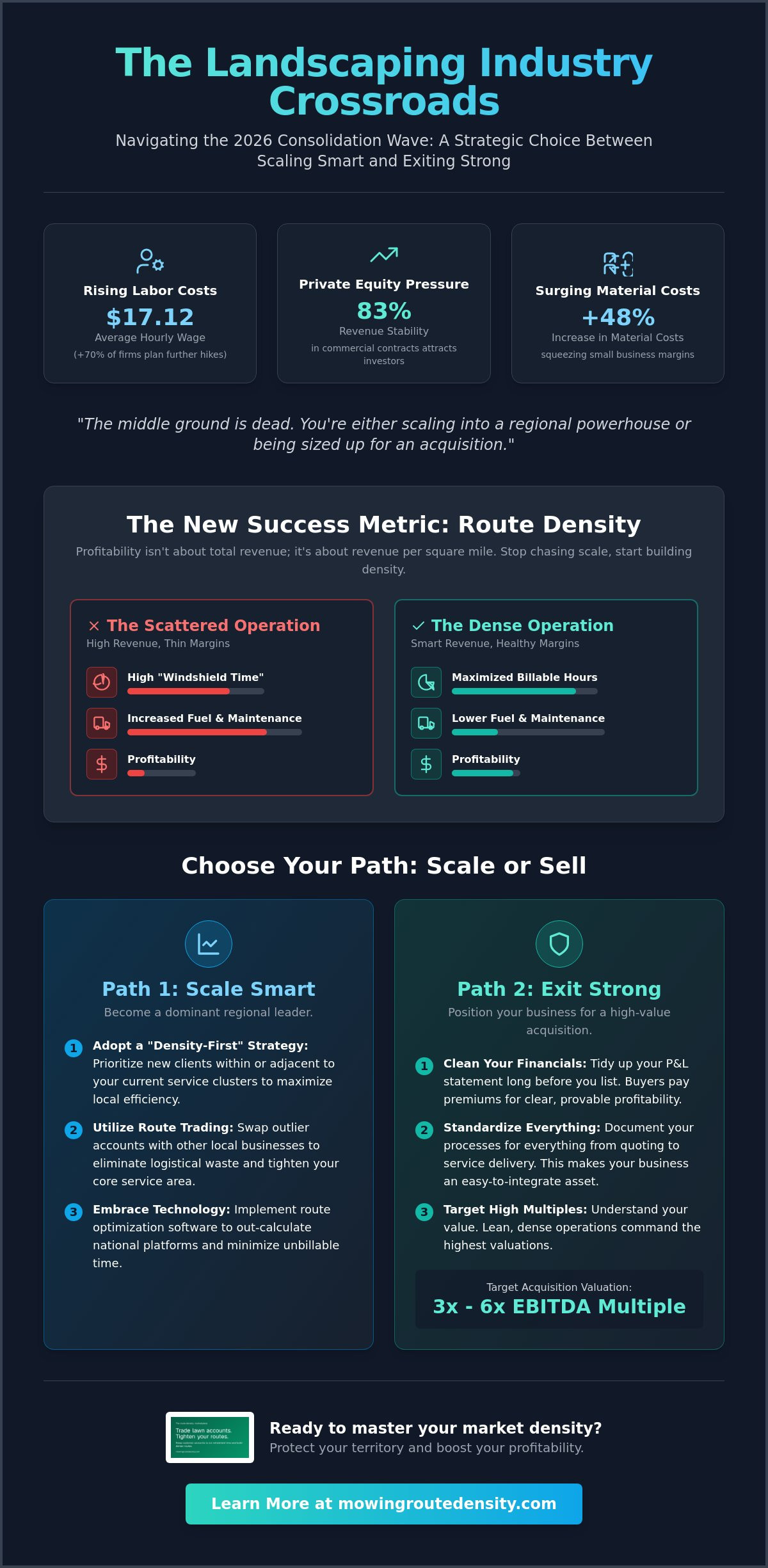
The market isn't just changing; it's being re-engineered. In 2026, the trend of business consolidation has reached a fever pitch. Private equity firms aren't looking for "mowers"; they're looking for cash flow machines. They want the 83% revenue stability found in commercial maintenance contracts. Smaller firms are struggling. With the average landscape worker earning $17.12 per hour and 70% of companies planning wage hikes, the solo operator is getting squeezed. Merging isn't just an option. It's a survival tactic for sharing the burden of overhead and labor management. Operational efficiency has become the primary differentiator between the winners and the losers who get left behind.
Why Private Equity Loves Landscaping Right Now
PE groups value "stickiness." Once a commercial contract is signed, it rarely moves without a major service failure. To enhance this retention, many firms partner with other facility experts like RPS Building Services to offer a more integrated maintenance solution to property managers. This predictability allows investors to apply a roll-up strategy. They buy small, high-density routes and stitch them together to create regional dominance. They aren't interested in your top-line revenue alone. They care about your EBITDA multiple. For landscaping firms in the lower middle market, these multiples currently sit between 3x and 6x. If your margins are thin because your routes are scattered, your multiple drops. PE wants lean, dense operations that they can scale without adding massive overhead.
The Technology Gap in Fragmented Markets
National platforms are winning because they out-calculate the local guy. They use sophisticated route optimization software to ensure their crews spend more time on the mower and less time in the truck. In this context, landscaping business consolidation is the systematic aggregation of service routes to eliminate logistical waste. If you're still eyeballing your schedule, you're losing money. Falling behind in logistics management means you can't compete on price. National players will undercut you because their cost-per-stop is lower. They have the capital to absorb the 48% increase in material costs that has crippled smaller competitors.
Then there's the green mandate. California's 2026 regulations have already started phasing out ornamental turf and gas equipment. Upgrading to professional-grade electric fleets requires massive capital. Small firms often don't have the cash. Consolidation provides the capital needed to meet these sustainability requirements while maintaining operational efficiency. In 2026, efficiency is the only differentiator that matters. If you aren't optimizing, you're exiting.
Scale vs. Route Density: The Independent Contractor’s Defense
Revenue is a vanity metric. Profit is a reality check. Many owners chase a $2 million top line while their crews spend half the day fighting traffic. This is a fatal mistake. In the face of aggressive landscaping business consolidation, your best defense isn't size; it's concentration. While Hyde Park Capital's M&A market insights show that buyers are hungry for scale, they pay the highest premiums for businesses with tight geographic clusters. They want density, and you should too.
Route density is the maximization of billable hours per square mile. It's the only way to combat the "Windshield Time" tax. Every minute your crew spends behind the wheel is unbillable labor. It's wasted fuel. It's unnecessary equipment wear. A $500,000 business with routes packed into two ZIP codes will almost always out-net a $2 million business scattered across the county. The larger firm has more trucks, more insurance, and more non-productive hours. Don't build a bigger business. Build a tighter one.
The Math of Marginal Utility in Mowing
One "outlier" account can ruin a day's profitability. If a crew drives 20 minutes for a 45-minute mow, you've lost nearly a third of your labor capacity. Tightening your geographic clusters reduces fuel consumption and lowers maintenance costs. It also boosts employee retention. Crews hate driving as much as you hate paying for it. They want to work, not sit in traffic. You can learn more about mastering these metrics in our guide to lawn care route density. High density creates an organized calm that national platforms struggle to replicate with their rigid, algorithm-driven schedules.
Competing with National Platforms on Efficiency
National platforms have massive budgets, but they lack your local intelligence. You know which neighborhoods have the best access and which clients have the highest lifetime value. Use this knowledge to maintain "Asset-Light" growth. Instead of buying more trailers to service a distant lead, trade your far-flung accounts with a competitor who's already there. Account swaps are the fastest way to fix a broken route and protect your margins from landscaping business consolidation. By focusing on a "Density First" mindset, you can achieve higher margins than the giants. If your routes are fragmented, it might be time to trade your outliers for better accounts and reclaim your bottom line.
Tactical Responses to Industry Consolidation
Landscaping business consolidation doesn't have to be your funeral. It can be your catalyst. While national platforms are busy buying up entire companies, you should be busy trading for the best routes. Stop servicing accounts that force your trucks to cross three highway interchanges. Use a lawn account trading platform to swap your outliers for properties that neighbor your existing clusters. This isn't just about getting bigger. It's about getting leaner. If you aren't optimizing your footprint, you're just subsidizing the fuel company.
Account Trading as a Growth Engine
Trading accounts is the most efficient way to grow without increasing your overhead. If you have a high-maintenance property twenty miles out, it's a drain on your labor and your equipment. Trade it. You need a formal lawn care client transfer agreement to ensure the handoff is professional and the revenue is protected. Value these accounts based on proximity. A property across the street from your current job site is worth three times more than one ten miles away. Trade the high-maintenance outliers for high-density clusters. It's tactical route liquidity that keeps your crews on the grass and off the road.
Asset-Light Fleet Management
Ownership is an anchor in a volatile market. Debt-funded equipment creates a fixed cost that doesn't care if you lose a contract or if rain delays your schedule. In the 2026 landscape, professional lawn equipment rental is a superior strategic framework. It allows you to scale field teams during peak demand without the long-term equipment depreciation. You stay agile. You pivot when market conditions change. If a national platform poaches a major account, you aren't stuck paying for a mower that's sitting idle in the shop. Renting ensures your equipment is always modern and your capital stays liquid.
Subcontracting is your overflow valve. Use it to handle seasonal spikes or distant leads without hiring permanent staff. This keeps your core team focused on your high-density "money routes." Let the subcontractors handle the fringe work while you keep the management margin. You keep the control. You survive the consolidation by being the most efficient operator in your specific ZIP code. Don't chase every lead. Chase the right ones.
The Exit Strategy: Positioning for Acquisition
Selling your business isn't a reward for years of hard work. It's a financial transaction based on future risk. If your P&L is cluttered with personal vehicle leases and non-essential overhead, you're lighting money on fire. Buyers in this era of landscaping business consolidation are looking for clean, predictable EBITDA. They want to see that your profits aren't a fluke. Clean up your books. Eliminate the "friend" discounts that drain your margins. Document every repeatable process so a stranger can run your crews tomorrow. Buyers don't care about your sweat equity; they care about your systems.
Beyond the paperwork, your personal presentation at the closing table matters; for those preparing for high-stakes meetings in the Wall Street area, George's Barbershop offers the precision grooming required to look the part of a successful founder during acquisition talks.
You don't have to sell the whole ship at once. Sometimes, you can achieve a higher total yield when you sell lawn mowing accounts individually to local competitors who are desperate for density. Valuation multiples in 2026 typically range from 3x to 6x EBITDA. To hit the high end of that range, your operation must look like a turnkey machine, not a chaotic job. If you're still the only person who knows the gate codes, you don't have a business. You have a job that nobody wants to buy.
Maximizing Route Liquidity
"Tight" routes command premiums. "Wide" routes are liabilities. If your crews are crossing county lines, you're selling a logistics nightmare. Acquirers want to buy clusters they can easily fold into their existing operations. Convert your handshake deals into transferable, written contracts. A buyer won't pay for a "promise" that a client will stay. They pay for legal certainty. Use a lawn care business exit strategy that prioritizes contract transferability and route density to ensure you don't get lowballed during negotiations.
Preparing for Due Diligence
Organize your customer data. Service history, payment patterns, and chemical application logs must be accessible and digital. The #1 buyer objection is customer churn during the transition. Prove your loyalty with data, not stories. Buyers pay for future stability, not past effort. If you can't prove the revenue will be there in six months, it doesn't exist to an acquirer. Professionalism in your records signals a low-risk investment. If you're ready to cash out, you can sell your routes for maximum value by positioning them as high-density, low-churn assets.
Future-Proofing Your Landscaping Business
Survival in a market defined by landscaping business consolidation requires a total shift in mindset. You can no longer afford to be a "yes man" to every lead that calls your office. If a prospect isn't within your existing tight clusters, they're a distraction. Adopting a "Density First" mindset means you prioritize the geography of the work over the size of the contract. You aren't just cutting grass. You're managing a logistics network. If the logistics don't work, the business won't either. You must build an operation that is always ready to sell, even if you plan to stay in the driver's seat for another decade.
Strategic partnerships are your secret weapon. You don't have to own every truck to dominate a market. By leveraging a lawn mowing service provider locator, you can identify other professionals who already have density where you have outliers. This allows you to trade work, share resources, and maintain a leaner footprint. Constantly audit your route profitability using marginal utility metrics. If the last hour of your crew's day is spent driving back from a distant job, that hour is costing you more than it's worth. Cut the waste before it cuts your valuation.
The B2B Advantage
Networking with other contractors allows you to handle national-scale projects without the massive overhead of a corporate platform. Use subcontractors to test new neighborhoods before you commit your own assets. This "asset-light" approach protects your capital while you scout for density. If a new area proves profitable, you can eventually move your own crews in. If it doesn't, you haven't wasted money on a new trailer. Learn the mechanics of this in our guide to finding lawn care subcontractors. Collaboration is the ultimate defense against aggressive landscaping business consolidation. Small, agile networks often move faster than bloated national platforms.
Final Strategic Checklist
To stay competitive and liquid, you need a recurring rhythm of operational audits. Don't wait for a crisis to check your vitals. Follow this checklist to ensure your business remains an asset:
- Review Route Density: Every 90 days, map your accounts. If a property is drifting away from your core clusters, trade it or drop it.
- Audit Equipment ROI: Compare the cost of ownership against rental costs annually. If a machine isn't hitting 80% utilization, rent it instead.
- Maintain Route Liquidity: Keep a digital, up-to-date list of your accounts. Be ready to trade or sell at a moment's notice.
- Standardize Everything: Document your training and service protocols. A business that runs without the owner is a business that commands a premium.
The industry is tightening. The margins are getting thinner for those who refuse to adapt. Focus on your density. Protect your cash flow. Stay lean. If you manage your logistics with the same precision you use on your turf, you won't just survive the consolidation; you'll lead it.
Master Your Market Before the Giants Do
The industry is tightening. You can't outrun the national giants, but you can certainly out-maneuver them. Landscaping business consolidation isn't a death sentence for the independent contractor who prioritizes density over ego. It's a mandate to stop chasing vanity revenue and start protecting your billable hours. Tighten your routes. Eliminate the windshield time that's bleeding your margins dry. Density isn't just a goal; it's your primary defense.
You've seen the 2026 drivers. You know that a dense operation is a valuable one. Now it's time to act. Whether you're scaling for dominance or cleaning up the books for a high-value exit, you need tools that keep you liquid. You don't have to face the market alone. Optimize your route density and trade accounts today on Mowing Route Density. Our secure lawn account trading platform, commercial mower rental network, and national B2B contractor locator are built to help you win. Stop wasting fuel. Start building an asset. You've got the strategy; now go execute it.
Frequently Asked Questions
What is landscaping business consolidation?
Landscaping business consolidation is the systematic merger of independent service providers into larger regional or national platforms. It's an industry wide shift toward logistical efficiency. Companies aggregate routes to eliminate waste and share overhead costs. This process turns fragmented markets into organized, corporate networks.
Why is private equity buying landscaping companies in 2026?
Private equity firms prioritize recurring revenue and predictable cash flow. Commercial maintenance contracts offer a high level of "stickiness" that investors love. They use roll up strategies to combine small routes into high value regional networks. These networks command higher EBITDA multiples than isolated, small businesses.
How does consolidation affect small landscaping businesses?
It forces a choice: scale up or exit. National platforms use route optimization software to undercut local pricing. This makes "wide" routes with high windshield time unprofitable. Small businesses often face aggressive account poaching and increased labor competition as larger firms offer higher wages.
Can I compete with a national landscaping platform?
You can win by dominating a specific geographic cluster. National platforms rely on rigid algorithms. You have local intelligence. By maximizing your route density, you can maintain higher margins and provide better service than a bloated regional giant. Stay lean and focus on your core ZIP codes.
What is the most important factor in a landscaping business valuation?
Buyers look for clean EBITDA and transferable contracts. Handshake deals don't count during a sale. Your valuation depends on documented, repeatable processes and a high percentage of recurring commercial revenue. Buyers pay for future stability, not your past effort. If your books are messy, your value drops.
Is it better to grow through organic acquisition or account trading?
Account trading is the superior tactical move for most. Organic acquisition often comes with heavy debt and logistical baggage. Trading allows you to swap distant outliers for properties that neighbor your existing jobs. You grow your profit without growing your overhead. It's growth without the debt anchor.
How does route density impact the sale price of my business?
Density is the primary driver of your multiple. A "tight" route reduces fuel consumption and labor waste. Acquirers pay a premium for these clusters because they are instantly profitable. Scattered routes are seen as a liability. They will lower your final sale price because they require more management and fuel.
Should I rent or buy equipment to prepare for consolidation?
Renting is the strategic choice for an agile business. Taking on heavy debt for equipment creates a fixed cost that doesn't care about your schedule. Professional rental allows you to scale field teams during peak seasons without the anchor of long term depreciation. It keeps your capital liquid and your business ready to pivot.


