
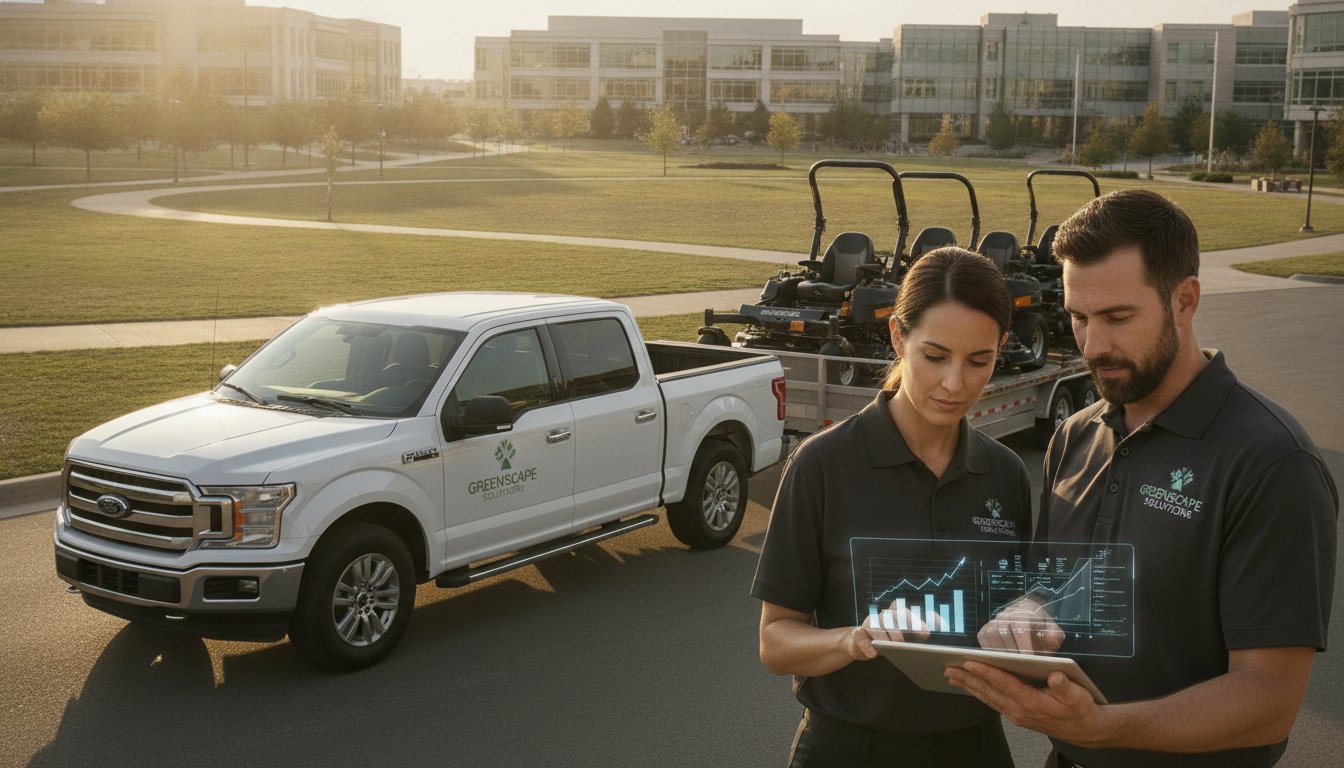
Ownership isn't the badge of honor you think it is. It's a lead weight on your balance sheet that stops you from moving when a lucrative new contract hits the table. You've likely felt the sting of shelling out thousands for a new fleet, only to watch those machines sit idle during the off-season while your debt-to-income ratio climbs. Utilizing a commercial mower rental long term strategy breaks the cycle that keeps ambitious operators small and financially stagnant.
We understand the frustration of unexpected maintenance downtime killing your route efficiency. You want to grow, but the capital requirements for 2026's new electric equipment mandates are daunting. You'll discover how to transform your equipment from a depreciating liability into a strategic lever for rapid, capital-efficient growth. We are breaking down how to preserve cash flow for route acquisition, maintain a modern fleet, and scale your operations based on contract density without the burden of long-term debt.
Key Takeaways
- Stop treating mowers as trophies and start treating them as tools for liquidity. Ownership locks up capital that belongs in route acquisition.
- A commercial mower rental long term strategy kills the hidden costs of maintenance and off-season storage. It keeps your balance sheet clean for your next big contract bid.
- Compare the total cost of ownership across rental, leasing, and financing models. Rental offers the agility needed to pivot as 2026 electrification regulations take hold.
- Align your equipment count with actual route density to maximize billable hours. Stop paying for machines that spend more time on a trailer than on a lawn.
- Use a unified platform to integrate equipment logistics with route trading. This approach ensures you never have more steel than you have grass to cut.
The Shift from Ownership to Access in Commercial Landscaping
Ownership is an anchor. For decades, the measure of a successful landscaper was the size of their fleet. In 2026, that logic is dead. Buying a $15,000 zero-turn mower just to watch it depreciate in a shed for four months of the year isn't business; it's a hobby. The "buy and hold" strategy fails because it ties up capital that should be used for route acquisition. Modern contractors are realizing they don't need to own steel to cut grass. They need access.
The Shift from Ownership to Access is a fundamental change in how service industries operate. An asset-light model prioritizes liquidity over title. By utilizing commercial mower rental long term, you move equipment costs from a fixed capital expenditure to a variable operating expense. This means your costs scale with your revenue. If you lose a contract, you return the machine. If you land a massive HOA, you add three more. You aren't stuck with a monthly payment on a machine that isn't earning its keep. By keeping your balance sheet clean, you preserve the cash necessary for lawn account trading, allowing you to buy high-margin routes rather than depreciating metal.
Why 2026 is the Year of the Asset-Light Contractor
The landscape has changed. New regulations in San Francisco have already banned gas-powered equipment for business owners as of January 1, 2026. California’s 2024 ban on the sale of new small off-road engines has finally squeezed the secondary market. Transitioning to electric fleets requires massive upfront capital. Even with financing offers like 1.9% APR for 36 months available through September 2026, you are still taking on significant debt. Agility is the only defense against a volatile economy. Asset-light contractors can pivot to meet new regulations without liquidating a fleet at a loss.
Short-Term vs. Long-Term Rental: Beyond the Daily Rate
Don't confuse a commercial mower rental long term agreement with a weekend rental for a one-off job. Daily rates are a trap designed for emergencies. They will bleed your margins dry. Long-term rental is a strategic commitment for a full season or a specific contract term. Daily rates cover the rental yard's overhead. Monthly rates reflect your operational volume. Seasonal agreements unlock fleet-level discounts. When you rent for the long haul, you aren't just paying for a machine. You are paying for guaranteed uptime and the ability to right-size your fleet to match your lawn care route density clusters. Stop paying daily premiums for a long-term problem.
Financial Mechanics: How Long-Term Rentals Protect Your Bottom Line
Every dollar tied up in a mower is a dollar that isn't buying a route. Ownership creates a "maintenance vacuum" that sucks the liquidity right out of your operation. You see the MSRP on the sticker, but you ignore the trailing costs of oil, blades, hydraulic fluids, and the $150-per-hour shop rates. By choosing a commercial mower rental long term, you stop gambling on your equipment's reliability. You turn volatile repair bills into a single, predictable monthly line item. This isn't just about cutting grass. It's about protecting your cash flow from the silent erosion of ownership costs.
Ownership also forces you to pay an "off-season tax." You pay for insurance, storage, and interest on that equipment for 12 months, even if it only generates revenue for eight. That is a massive drain on your efficiency. When you shift to an asset-light model, you stop paying for idle iron. You can acquire high-margin routes using the capital that would otherwise be locked in a trailer. Decisions should be based on ROI, not on how much debt you can carry. Understanding the nuances of Rental vs. Leasing vs. Financing is critical for any contractor looking to scale without the weight of a traditional bank loan.
Preserving Capital for Route Acquisition
Cash is your most valuable tool. If a competitor goes under or a local operator wants to retire, you need to move fast. If your capital is tied up in five zero-turns, you lose that opportunity. Rental keeps you liquid. Consider the scenario of a contractor who scaled their fleet by five units mid-season to handle a new municipal contract. Instead of a $75,000 hit to their credit line, they used a long-term rental agreement. They secured the revenue without the debt-to-income ratio damage that stops future expansion. If you want to see how this fits into a larger growth plan, you can optimize your route density through our platform while keeping your fleet flexible.
Offloading Maintenance and Depreciation Risks
The true cost of a breakdown isn't the repair bill. It's the four days of lost billable hours and the risk of a client firing you for a late cut. Long-term rental agreements often include replacement guarantees that keep your crews moving. You get a modern, high-uptime fleet without the headache of managing a shop. Depreciation is the silent erosion of your company's net worth, turning today's expensive asset into tomorrow's scrap metal. By utilizing a commercial mower rental long term, you let the rental company eat the depreciation while you focus on the only thing that matters: the margin on every man-hour.
Rental vs. Leasing vs. Financing: A Tactical Comparison
Financing isn't a strategy; it's a commitment. Most contractors view 1.9% APR financing as a win. They see a low interest rate and assume they've beaten the system. They haven't. They've just agreed to carry a depreciating asset on their books for three to five years. When you compare the total cost of ownership (TCO), financing and leasing often look cheaper on paper because they ignore the cost of lost agility. A commercial mower rental long term agreement might have a higher monthly line item than a loan payment, but it carries zero debt. Debt kills your ability to borrow when a real opportunity, like a competitor's route list, becomes available.
Leasing is often marketed as the middle ground, but it's usually just a cage with better upholstery. You are locked into hours-of-use limits and rigid return conditions. If you exceed those hours, you pay a premium. If you return it early, you pay a penalty. Rental flips the script. It prioritizes access over obligation. You get the equipment you need for the duration you need it, without the long-term balance sheet damage. This clean debt-to-equity ratio is what separates the operators who stay small from the strategists who scale.
The Flexibility Advantage of Rental Agreements
Flexibility is the new currency in landscaping. 2026 is a year of transition. As cities move toward electrification, owning a fleet of gas-powered mowers is a liability. If you finance a new gas unit today, you risk being "underwater" on a loan for a machine you can't legally use in certain zones by 2027. Long-term rental allows you to upgrade technology mid-season without trade-in losses. If a drought hits or a major contract falls through, you return the equipment. You stop the bleeding immediately. You can't return a bank loan just because it stopped raining.
Tax Implications and Balance Sheet Optimization
Stop chasing Section 179 tax breaks and start chasing cash flow. While financing allows for accelerated depreciation, it requires you to have enough profit to offset the deduction. Rental payments are 100% deductible as a direct operating expense. It's simpler. It's cleaner. True lawn care profit margin optimization starts with lean assets. By keeping mowers off your balance sheet, you maintain the financial strength to pivot. Whether you are looking at real estate or route acquisitions, a bank wants to see liquidity, not a yard full of aging steel. Use rental to keep your assets light and your growth potential heavy.

Operational Integration: Scaling Your Fleet to Match Route Density
Efficiency isn't just about how fast a blade spins. It's about how much time that blade spends on the grass versus the trailer. Most contractors ignore the logistical drain of mismatched equipment. They buy a standard fleet and try to force it onto every route. A smarter approach is the "Density First" strategy. By utilizing a commercial mower rental long term arrangement, you can deploy specific deck sizes to match the lawn care route density of a particular cluster. If you win a tight residential neighborhood, you rent 36-inch stand-ons. If you pick up a warehouse complex, you swap for 72-inch zero-turns. You stop wasting man-hours on the wrong tool for the job.
This model also eliminates transportation waste. Instead of hauling a massive trailer across town, you can strategically place rented assets near your densest route clusters. This reduces fuel consumption and wear on your trucks. It's about tightening every part of the operation. If you aren't optimizing your fleet for your routes, you are leaving money on the curb. You can trade routes to increase your density, then rent the exact iron needed to dominate those accounts. It's a system built for profit, not for pride of ownership.
Right-Sizing Equipment for Clustered Accounts
Matching deck size to route geography is the fastest way to boost your hourly billable rate. Long-term rentals allow you to test new equipment types in the field without a permanent financial commitment. You might find that a certain stand-on model increases speed by 15% on your specific accounts. While commercial lawn mower lease options provide some structure, they lack the immediate flexibility of long-term rentals when you need to swap machines mid-season to meet changing route requirements. Testing beats guessing every time.
Managing Seasonal Surges and Fleet Gaps
Stop keeping "junk" mowers in the back of the shop for emergencies. They take up space. They leak oil. They frustrate your mechanics. Use the "Bridge Strategy" instead. Rent the extra capacity you need for the peak four months of the growing season. This ensures your crews have modern, reliable machines when the grass is growing fastest. If your capacity is still maxed out despite your rental fleet, leverage a lawn mowing service provider locator to find vetted partners who can take the overflow. This keeps your clients happy without forcing you into permanent overhead increases. Ready to start lean? Explore our rental and route optimization tools to build a more profitable operation today.
Executing Your Growth Strategy with Mowing Route Density
Steel doesn't make you money. Density does. Mowing Route Density bridges the gap between the iron you use and the income you generate. Most contractors treat equipment and accounts as separate problems. They aren't. They are two sides of the same coin. If you have the accounts but lack the gear, you're inefficient. If you have the gear but lack the accounts, you're bleeding cash. Our platform provides a unified marketplace where you can trade routes to increase your concentration and secure a commercial mower rental long term to service those new clients immediately. It's a closed-loop system for growth.
Scaling a landscaping business used to mean begging a bank for a line of credit every time you added a crew. That model is slow. It's risky. It's outdated. By utilizing our lawn account trading platform, you can buy and sell routes to create the most efficient geographical footprint possible. Then, you fuel that engine with professional-grade mowers designed for high-volume use. You aren't just renting a machine. You are renting a result. You are ensuring that every hour your crew spends on the clock is a billable hour spent on a high-density route.
Leveraging the Marketplace for Equipment and Accounts
Success in 2026 requires syncing your logistics with your sales. When you acquire a new cluster of accounts, you need the right tools on day one. A commercial mower rental long term agreement allows you to scale up without the traditional growing pains of debt. You get access to the latest technology, including the electric models required by shifting regulations, without the $20,000 price tag. You scale your fleet to match your revenue, not your credit limit. This is how you build a resilient, high-density service network that survives economic shifts.
The Path to a More Liquid Business
Think about the day you want to stop. Every business owner needs a lawn care business exit strategy that maximizes their payout. Potential buyers don't want a yard full of aging, beat-up equipment. They want a high-density route list and a clean balance sheet. An asset-light model increases your valuation because it proves your profit comes from your operations, not your iron. Buyers see a liquid, agile business that is easy to take over. Stop building a museum of depreciating assets. Optimize your density, rent your tools, and grow your profit. The weight of ownership is optional. Shed it today.
Build Your Empire on Routes, Not Iron
The era of the "buy and hold" fleet is over. In 2026, the most profitable contractors are those who prioritize liquidity and operational agility over the title to a depreciating asset. You've seen how ownership creates a maintenance vacuum. It ties up the capital you need to acquire high-margin routes. Shifting to a commercial mower rental long term strategy isn't just a temporary fix for a broken machine. It's a strategic pivot. It allows you to scale your fleet to match your route density without the anchor of long-term debt.
You now have the framework to protect your bottom line. Use rentals to offload maintenance risks. Use our marketplace to trade accounts and tighten your service clusters. Stop paying the "off-season tax" on idle equipment. Start investing in the assets that actually grow your net worth: your routes. Ready to shed the weight? Maximize your margins with asset-light growth at Mowing Route Density. We provide the B2B equipment solutions and route trading marketplace you need to build a high-density service network. The path to a leaner, more profitable business starts here.
Frequently Asked Questions
How long is a typical long-term commercial mower rental contract?
Most agreements align with your growing season, typically spanning four to eight months. Some operators choose 12-month terms to lock in lower rates and ensure availability for year-round contracts. The goal is to match your equipment access to your revenue cycle. Don't pay for steel that sits idle in a shed. Match the term to your actual billable hours.
Is maintenance included in long-term commercial mower rentals?
Yes, major maintenance is typically built into a commercial mower rental long term agreement. This covers the mechanical repairs and routine servicing that usually kill your route efficiency. You handle daily checks, fuel, and basic blade care. The rental provider manages the heavy shop work. This offloads the maintenance vacuum and guarantees your crews spend more time on the grass.
Can I swap mower types mid-contract if my route density changes?
Flexibility is the core of the asset-light model. Most agreements allow for equipment swaps if your route density changes significantly mid-season. If you trade a cluster of small residential accounts for a massive commercial park, you can swap a stand-on for a 72-inch zero-turn. This ensures you always have the right tool for the job without the burden of a trade-in loss.
What happens to my rental mower during the winter off-season?
You return the equipment to the provider. This is how you eliminate the "off-season tax" that ownership forces you to pay. Why pay for insurance, storage, and interest on a machine that isn't earning revenue? By returning the mower during the winter, you preserve your cash flow. You can use that capital to buy routes or prepare for the next season's growth.
Is long-term rental cheaper than commercial mower leasing?
Rental is often more efficient than leasing when you calculate the Total Cost of Ownership. Lease payments might look lower on paper, but they lack the flexibility to return equipment during a drought or economic downturn. Rental keeps your balance sheet clean and your debt-to-income ratio low. This financial agility is worth more than the slight monthly savings of a rigid lease contract.
Do I need special insurance for a long-term commercial mower rental?
You generally need an inland marine policy or a specific rider on your general liability insurance. This covers the equipment against theft, vandalism, or accidental damage while it's in your care. Most rental providers require proof of this coverage before delivery. It's a standard cost of doing business that protects your margins from catastrophic equipment loss on the job site.
How does renting equipment affect my business tax deductions?
Rental payments are typically 100% deductible as a direct operating expense. This is much simpler than ownership, which requires managing depreciation schedules and Section 179 deductions. It provides an immediate tax benefit and keeps your accounting lean. By treating equipment as a variable cost rather than a fixed asset, you maintain the liquidity needed for rapid business scaling.
Can I rent multiple commercial mowers for a national fleet?
Yes, we support national fleet management for contractors with multi-region operations. Renting multiple units allows you to maintain a modern, consistent fleet across all your service areas without the logistical nightmare of hauling trailers across state lines. This ensures every crew has reliable, professional-grade equipment. It's the most efficient way to scale a high-volume service network without taking on massive debt.


