Revenue is vanity, but route density is sanity. Most contractors think they're scaling when they buy lawn care routes, but they're often just buying a logistical nightmare. If your new accounts are scattered across three different zip codes, you aren't growing. You're just subsidizing the gas station. You've felt that frustration before. You see a "profitable" account on paper, but by the time you account for drive time and equipment wear, the profit is gone. It's a trap that turns a promising business into a high-stress delivery service.
You need a strategy that prioritizes the bottom line over a crowded calendar. This guide delivers a pragmatic approach to acquiring accounts that actually build margin. We'll show you how to identify high-density clusters and use account trading to swap out the outliers that drain your resources. You'll also learn how to leverage commercial mower rentals to service new routes without the burden of heavy upfront debt. We're moving past the "work harder" mentality to focus on clinical, strategic efficiency that respects your time and your bank account.
Key Takeaways
- Stop burning fuel on scattered accounts; route density is the only metric that dictates your actual take-home pay.
- Audit service history with professional skepticism to ensure you buy lawn care routes composed of long-term, recurring contracts rather than high-churn flyers.
- Adopt an asset-light growth model by using commercial mower rentals to service new accounts without sinking capital into heavy equipment debt.
- Discover why a tight, neighborhood-specific route commands a 20% valuation premium over a fragmented list of clients.
- Use the "Swap" strategy to trade away distant, low-margin accounts for ones that fit your core operational footprint.
Stop Chasing Leads: The Logic of Buying Lawn Care Route Density
Revenue is vanity. Density is sanity. It’s a hard truth most owners ignore until their fuel bill exceeds their payroll. When you buy lawn care routes, you aren't just purchasing a list of names. You're purchasing the right to stop driving and start mowing. Every minute your crew spends behind a steering wheel is a minute you aren't getting paid. Strategic acquisitions turn drive time into billable hours instantly. It is the fastest way to fix a broken margin.
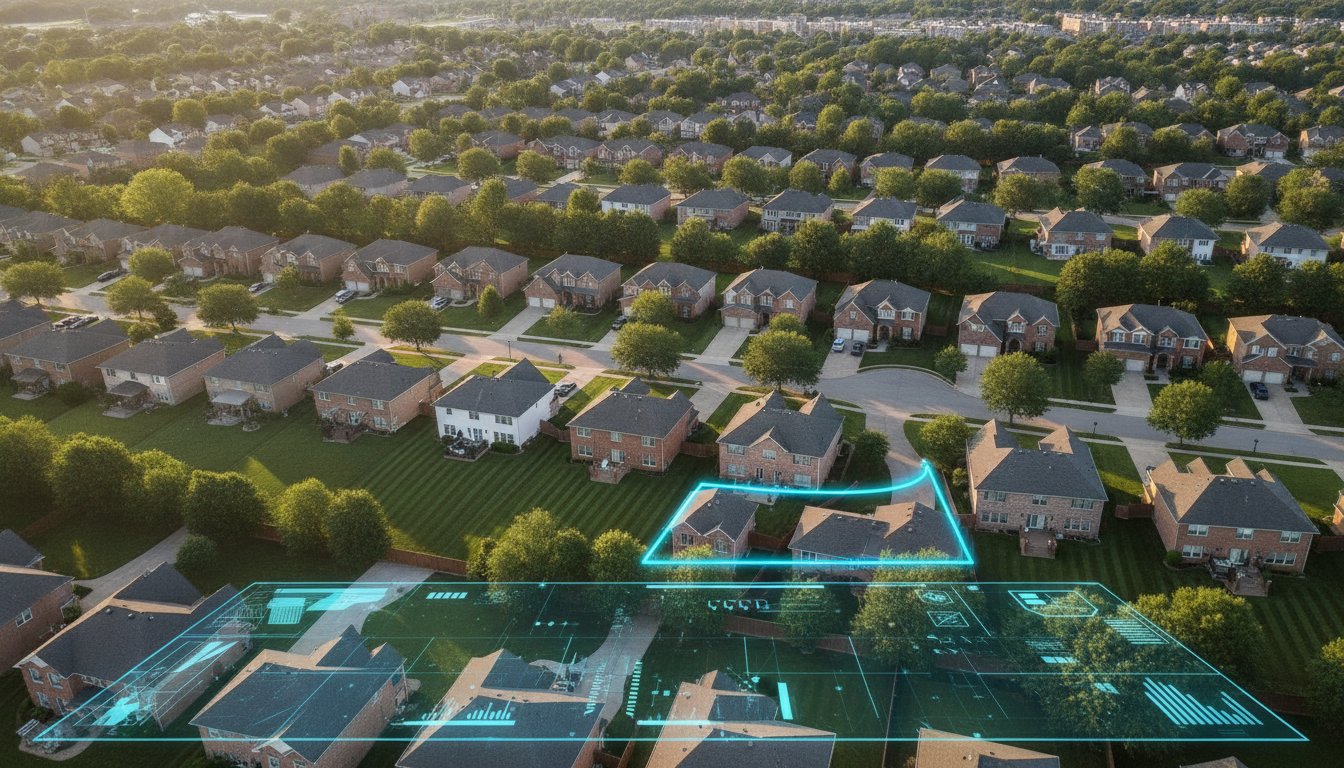
Think about the clustering effect. Fifty houses in one zip code beat 100 houses scattered across the county every single time. The 50-house cluster allows one crew to finish a full day's work without ever leaving a three-block radius. The 100-house route requires more trucks, more fuel, and more non-billable labor. You don't need more customers. You need more customers who live next door to each other.
Why Organic Growth is Often Too Slow
Marketing costs are rising while labor remains a fixed bottleneck. Door hangers and digital ads are expensive gambles that often yield fragmented results. Even a "successful" campaign might land you three new clients miles apart. This isn't growth; it's a logistical headache. Buying existing contracts provides immediate cash flow from day one. It also acts as a strategic moat. By locking down a specific neighborhood, you prevent competitors from gaining a foothold in your target area. You skip the expensive customer acquisition phase and go straight to the profit.
The Density Dividend: Calculating Your Savings
Tight routes save more than just time. They save your equipment. Shorter transit distances mean reduced fuel consumption and lower wear and tear on your fleet. The landscape maintenance industry is built on narrow margins that are easily eaten by overhead. If you want to protect your bottom line, you must optimize your transit. Route density is the ratio of billable time to total shift time. If your crew is on the clock for eight hours but only mowing for five, you have a massive waste factor. When you buy lawn care routes with a density-first mindset, you eliminate that gap. You stop paying for "windshield time" and start paying for production. It’s a common-sense remedy to the most overlooked financial drain in the business.
The Due Diligence Audit: Separating Quality Accounts from Operational Waste
Don't trust a seller's spreadsheet. It was designed to justify a high price, not to protect your profit. When you buy lawn care routes, you are inheriting another owner's logistical choices. If those choices were sloppy, you'll be the one paying for the wasted fuel and idle labor. Start with professional skepticism. Treat every revenue claim as a theory until you prove it with data. Your goal is to separate the high-margin clusters from the operational waste that will drag your crew down. For a standard framework on acquisitions, consult the SBA guide to buying a business before signing any intent to purchase.
Audit the service history with clinical precision. You need to know if these are long-term clients or high-churn flyers. If a route shows a high turnover rate, you aren't buying a business. You're buying a treadmill. You'll spend all your energy and capital just to keep the revenue flat. Distinguish between one-off landscape projects and recurring maintenance contracts. Recurring revenue is the only metric that matters for long-term scaling. Project work is volatile; maintenance is predictable.
The Red Flags of a Bad Route
Watch out for high client concentration. If one customer makes up 30% or more of the total revenue, the route is fragile. Losing that one account could cripple your cash flow. Look for low-margin accounts that haven't seen a price increase in years. These are often "legacy" clients who expect 2018 pricing in a 2026 economy. Finally, identify accounts that are physically isolated from the rest of the cluster. One "gold mine" property located 15 miles away from your other stops is actually a drain on your resources.
Verifying the Numbers
Demand at least 24 months of payment history for every account. This reveals the true stability of the income. Look for "hidden" costs that the seller might have overlooked. Does a specific property require specialized equipment like a walk-behind mower for steep hills? Does another require a pesticide applicator license that your team doesn't currently hold? These details change the math on profitability. You can use our guide on lawn care route density to evaluate the true logistical value of these accounts. If you find outliers during your audit, you can always use our account trading platform to swap them for properties that actually fit your footprint.
Scaling Without the Overhead: Mower Rental vs. Capital Expenditure
Buying a route is a major capital commitment. Don't bury yourself in equipment debt at the same time. Many contractors make the mistake of financing a fleet of new zero-turns the same month they buy lawn care routes. This is a recipe for a cash flow crisis. You're taking on the risk of new accounts while simultaneously tethering yourself to high-interest monthly payments. Asset-light growth is the smarter play. It allows you to service new accounts while you test the actual profitability of the route. If a neighborhood doesn't pan out, you aren't stuck with a $17,000 Scag Turf Tiger II sitting idle in your shop.
Watch out for the "Inherited Junk" trap. Sellers often try to sweeten the deal by including their aging equipment in the asking price. Professional skepticism is required here. Most of the time, you're just paying to take their maintenance headaches off their hands. A mower with 2,000 hours on the frame is a liability, not an asset. It will break down when your crew is three stops behind. While a standard guide to buying a business will walk you through the legalities of the transaction, you must focus on the mechanical reality of the operation. Don't pay a premium for someone else's scrap metal.
The Case for Commercial Mower Rental
Commercial mower rental is a tactical lever for immediate scaling. It allows you to avoid the massive depreciation hit that comes with buying brand-new hardware for a fresh route. You get access to late-model, high-performance machines without the long-term debt. This approach ensures 100% uptime because rental units typically include maintenance support. If a machine goes down, you swap it out and keep moving. For more detailed fleet strategies, see our framework on professional lawn equipment rental. It’s about keeping your crews productive, not keeping your mechanic busy.
Leasing as a Growth Lever
If you prefer a longer-term arrangement without the full purchase price, look into commercial lawn mower lease options. Leasing preserves your cash for further route acquisitions. Why tie up $50,000 in hardware when that same cash could buy another high-density cluster? This strategy matches your equipment specs to the specific needs of the acquired route. If the new route consists of tight residential gates, lease 36-inch stand-ons. If it’s wide-open commercial lots, go for 72-inch riders. Flexibility is your greatest asset in a shifting market. Don't let heavy iron weigh down your growth.

Valuation Frameworks: What a Profitable Route is Actually Worth in 2026
Don't fall for the "weekly sales" trap. Many sellers will try to price their business at 10x or 15x their weekly revenue. This is a lazy metric. It ignores your biggest enemy: overhead. When you buy lawn care routes, you're buying future cash flow, not just a top-line number. A route with $5,000 in weekly sales might be worth significantly less than a $4,000 route if the latter is packed into a single neighborhood. You are paying for the efficiency of the cluster, not the size of the invoice. Multiples are just a starting point. The real math happens when you look at the "Density Premium." A tight, neighborhood-specific route is worth 20% more than a scattered one because the profit margin is baked into the geography.
The legal structure of the client list also dictates the price. Handshake deals are worth nearly nothing in a professional acquisition. You need transferable, written contracts to ensure the revenue doesn't vanish the moment the previous owner stops showing up. Negotiate a structured "Handoff" where the seller remains involved for 30 to 90 days. This transition period is critical to prevent churn. If the customers don't trust the new face in the truck, they'll leave. You shouldn't pay full price for an account until it has stayed through the first three months of your ownership.
EBITDA vs. Gross Revenue
Revenue pays the bills; EBITDA builds wealth. You must calculate the Seller’s Discretionary Earnings (SDE) or EBITDA with clinical precision. Factor in labor costs at current 2026 market rates. If the seller was an owner-operator doing the mowing themselves, you must subtract a fair manager's salary from the profit to see the true value. You can use our guide on lawn care profit margin optimization to help strip away the fluff and find the real numbers. If the math doesn't work at market labor rates, the route isn't a business. It’s just a job.
The 2026 Market Trends
Consolidation is accelerating. Small, inefficient routes are being swallowed by high-density players who understand logistics. In the current market, expect to pay a premium for commercial maintenance contracts. These are valued higher than residential accounts because of their long-term stability and higher barrier to entry. To protect your capital, structure a "Performance-Based" buyout. Tie a portion of the purchase price to client retention. If accounts cancel within the first six months, the final payout is adjusted downward. This keeps the seller honest and protects you from immediate client loss. Ready to find your next high-margin cluster? Browse our lawn account trading platform to see what’s available in your target zip codes.
The Mowing Route Density Marketplace: Buy, Sell, and Swap for Maximum Margin
Most contractors treat a route purchase as a static asset. They buy it, they mow it, and they accept the travel time as a cost of doing business. That’s a mistake that leaves money on the table. In a competitive market, you can't afford to settle for what's available. You need to curate your service area with clinical precision. When you buy lawn care routes through a specialized B2B marketplace, you gain the ability to treat accounts like currency. You aren't just adding revenue; you're refining your operational footprint. This is a platform built for contractors by people who understand that profit is made in the minutes between stops, not just the hours on the mower.
The traditional marketplace model is broken because it’s too broad. Generic business listing sites don’t care about your zip code density. They just want the transaction fee. We focus on the logistics. By leveraging a national network of service providers, you can find subcontractors for routes you can’t service yet or identify partners for regional expansion. It’s about strategic foresight. If you have a high-value commercial lead in a territory where you lack a crew, use the network to bridge the gap while you build the density required to self-perform.
Why Swapping Beats Buying
Buying a route often leaves you with "outlier" accounts. These are the properties that sit ten miles away from your core cluster. They kill your daily schedule and inflate your fuel costs. Instead of struggling to service them, trade them. The "Swap" strategy allows you to exchange those distant accounts for properties that fit your existing routes. You trade volume for density without losing total revenue. It’s a common-sense way to tighten your operations. You can explore how this exchange works by visiting our lawn account trading platform. Stop paying a "distance tax" on your own labor.
Getting Started on the Platform
Optimization starts with an honest audit of your current list. List your outlier accounts on the marketplace to attract trade partners who are already working in those neighborhoods. What is a logistical nightmare for you might be the perfect "tuck-in" for a competitor. At the same time, use our lawn mowing service provider locator to find established partners for networking and expansion. When you buy lawn care routes with the intent to swap and optimize, you aren't just growing. You're building a leaner, more resilient business that can survive rising costs. Efficiency isn't a goal; it's a requirement for survival in 2026.
Dominate Your Zip Code with Strategic Route Density
Scaling a business isn't about the size of your fleet; it’s about the proximity of your stops. You've seen how density is the only metric that protects your bottom line from rising fuel and labor costs. When you decide to buy lawn care routes, do it with a clinical focus on the "Density Premium." Buying the revenue is just the start. The real profit comes from refining that list and swapping out the outliers that drain your resources. Don't let aging equipment or scattered accounts slow your growth. Stay agile by using commercial-grade mower rentals to service new clusters without the burden of long-term debt.
Success in 2026 requires a shift from "working harder" to "mowing smarter." Focus on building tight neighborhood clusters that maximize every billable hour. Our platform is built for operational efficiency, providing you with the tools to trade volume for margin. Optimize your route density and trade accounts on our secure B2B platform. With secure account swapping and flexible equipment options, you can finally build the high-margin business you deserve. It’s time to stop chasing leads and start owning your market.
Frequently Asked Questions
How much does it typically cost to buy a lawn care route?
Pricing is usually based on a multiple of annual revenue or Seller's Discretionary Earnings (SDE). For smaller residential routes, expect to pay between 0.5x and 1.0x of annual revenue. Larger operations with strong recurring contracts often trade at 2.5x to 5x SDE. High-density routes command the top end of these ranges because they require less fuel and labor to service.
How do I prevent clients from leaving after I buy a route?
Structure a performance-based buyout with a retention clause. Hold back a portion of the purchase price for 90 days to ensure the accounts stay active during the transition. Require the seller to perform a "warm handoff" by introducing your crew to key clients personally. If you buy lawn care routes without a transition plan, you're gambling with your capital.
Is it better to buy a residential or commercial lawn care route?
Commercial routes offer long-term stability and higher valuation multiples, often reaching 4x to 6x EBITDA. However, residential routes can provide higher net profit margins of up to 20% if they are tightly clustered. Your choice depends on your equipment and labor capacity. Commercial work requires heavy iron and specialized insurance, while residential work relies on high-speed execution and density.
What is the standard multiplier for valuing a landscaping business in 2026?
Most owner-operated businesses trade at 2.5x to 5x SDE in the 2026 market. Companies with high-margin commercial maintenance contracts can see multiples as high as 7x EBITDA. Private equity roll-ups are currently driving these prices higher for "platform" companies. Don't pay a premium for project-based revenue; only recurring maintenance contracts build real business value.
Can I buy a lawn care route without buying the equipment?
Yes, and it is often the smarter strategic move. You can negotiate an "asset-light" purchase that only includes the client contracts and service history. This allows you to avoid paying for the seller's aging, poorly maintained machinery. Use commercial mower rentals to service the new accounts while you evaluate the true profitability of the route.
What legal documents are needed to finalize a route purchase?
You need a formal Asset Purchase Agreement (APA) and a Bill of Sale to transfer ownership. Ensure the deal includes a non-compete agreement to prevent the seller from poaching the clients six months later. You also need a verified list of transferable service contracts. Without written proof of recurring revenue, you aren't buying a business; you're buying a list of suggestions.
How does route density affect the resale value of my business?
Density is a direct multiplier of your valuation. A route packed into a single zip code is worth significantly more than a scattered list of accounts because it generates more billable hours per shift. Buyers in 2026 look for "clusters" that minimize non-billable drive time. When you buy lawn care routes, look for geographic concentration to ensure your future exit value stays high.
Should I use a broker to buy a lawn care route?
Brokers can help manage the paperwork, but they often lack the industry-specific knowledge to evaluate route logistics. They focus on the transaction, not your long-term margin. Using a specialized B2B trading platform allows you to vet accounts based on operational efficiency and density. It’s better to deal directly with other contractors who understand the reality of fuel costs and labor bottlenecks.


