Most owners think scaling a lawn care business is a marketing problem. It isn't. It's a math problem. If your strategy for growth is simply adding more trucks and more crews, you're likely just scaling your headaches. More equipment means more breakdowns. More crews mean more labor costs, which currently average around $19.05 per hour for specialists. When you factor in gas prices hovering near $3.91 per gallon, every extra mile of windshield time is a direct hit to your bottom line.
You already know that scattered routes and aging fleets are eating your margins. It's a frustrating cycle of working harder just to stay in the same place. We're here to break that cycle. This guide will show you how to double your revenue without doubling your stress by mastering route density and transitioning to asset-light operations. We'll examine the specific logistics of tightening your service area, optimizing billable hours, and leveraging flexible equipment solutions to keep your profit predictable and your operations lean in 2026.
Key Takeaways
- Recognize the growth paradox: more accounts often mean less profit if your logistics aren't tight.
- Learn why route density is the only lever that matters when scaling a lawn care business in a high-fuel-cost environment.
- Protect your cash flow by using commercial equipment rentals to scale your fleet without massive down payments.
- Stop buying leads and start trading accounts to build instant density and recover wasted labor hours.
The Scaling Paradox: Why More Accounts Often Mean Less Profit
Growth is a trap. Most owners chase top-line revenue like a trophy. It isn't. It's a liability if you don't have the density to support it. The lawn care industry is massive; however, it's littered with bankrupt companies that grew too fast and too wide. This is the "Scaling Paradox." It occurs when your operational complexity grows faster than your profit. Success in scaling a lawn care business depends on your ability to say no to the wrong growth. You add a crew. You buy a truck. You land five new accounts. But those accounts are 15 miles away. Now you're paying for more fuel, more maintenance, and more windshield time. Revenue is vanity. Profit is sanity. If your expansion doesn't increase your margin, it's just more work for less money.
Revenue vs. Margin: The Math of Scaling
A $500,000 business can easily take home less net profit than a $250,000 business. Overhead is the killer. When you are scaling a lawn care business, every mile your truck travels between jobs is a non-billable expense. If your $500k operation requires twice the fleet and three times the travel time, your margins vanish. We call this the "Windshield Time Trap." You're paying a specialist $19.05 an hour to sit in traffic. You're burning gas at $3.91 a gallon while the mowers sit idle. Break-Even Density for a standard three-man crew requires a minimum of four billable hours for every one hour of transit time to maintain a 20% net margin.
The Logistics of Waste
Waste isn't just a line item. It's a systemic leak. Poor route planning compounds. It accelerates equipment wear. It increases the frequency of breakdowns. It also destroys team morale. Crews hate spending half their day in a hot truck. They want to work, finish, and go home. Inefficient growth creates a "leaky" P&L statement where profit is bled out through several channels:
- Excessive fuel consumption from cross-town travel.
- Unnecessary oil changes, tire rotations, and engine hours.
- Overtime pay triggered by long drive times rather than billable work.
- Employee turnover caused by the frustration of disorganized schedules.
Stop looking at the total number of houses on your list. Start looking at how close they are to each other. Every mile you cut from your route is money you put back into your pocket. If you can't service a new account within five minutes of an existing one, you aren't growing. You're just getting busier. True scale requires a clinical focus on tightening your footprint, not expanding your map.
Mastering Route Density: The Only Logistics Lever That Matters
Density isn't a buzzword. It's the physical distance between your mower blades and the next curb. Period. When you're scaling a lawn care business, you're often tempted by volume. Don't be. Fifty accounts in a single ZIP code will always outperform 100 accounts spread across three counties. Why? Because you aren't paying for transit. You're paying for production. Every minute spent on a highway is a minute you aren't billing. It's a minute your specialized equipment isn't earning. Route optimization isn't just about finding the fastest path; it's about eliminating the path entirely.
Think of your service area as a fortress. You want to dominate a neighborhood until your truck is a permanent fixture on the street. This clustering strategy makes your business impenetrable to competitors, especially when supported by a Google-compliant reputation management plan from WhoRatesMe. It also keeps your team happy. Labor turnover is a massive, hidden cost. Workers stay when they are productive. They quit when they spend four hours a day staring at a dashboard. Maximizing billable hours through density is the most effective retention strategy you have. If your crews are mowing rather than driving, they feel the efficiency, and your P&L reflects it.
The Anatomy of a Dense Route
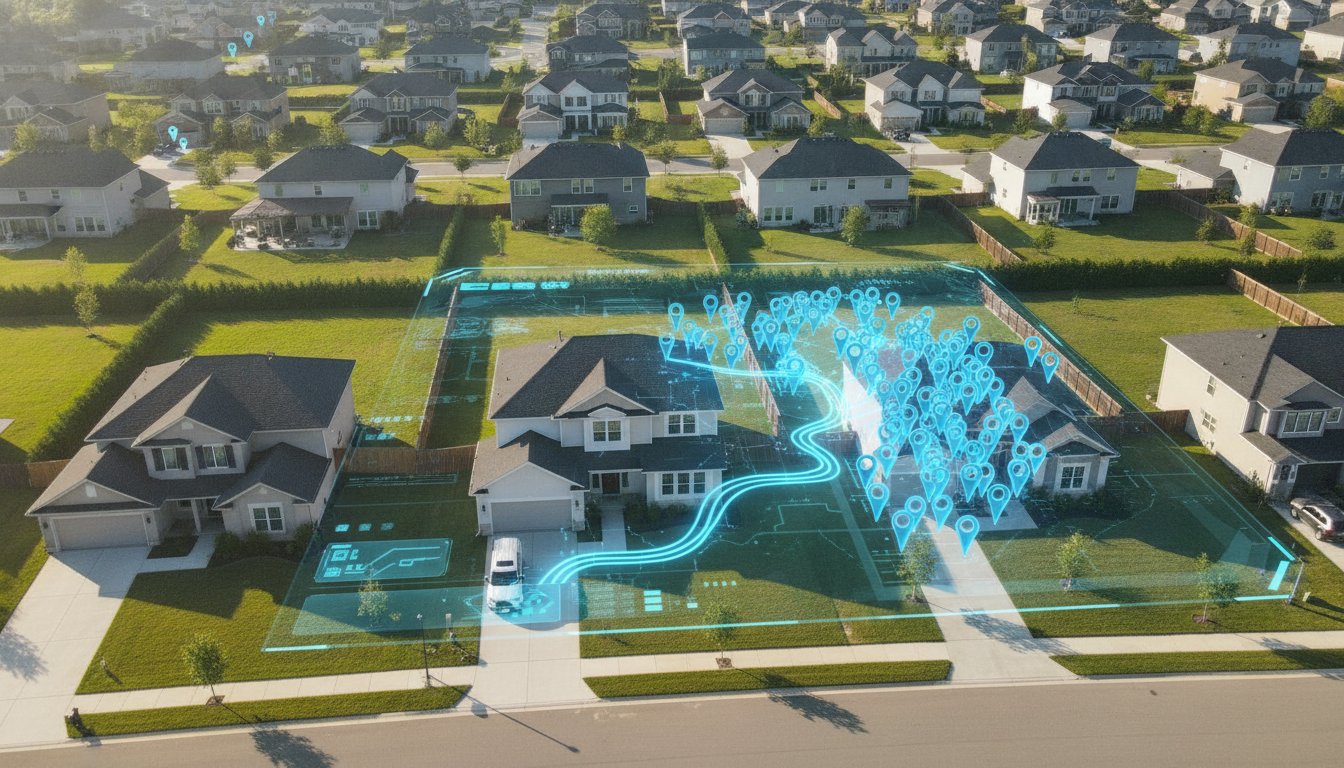
Visualize your routes. Are they clusters or strings? A "string" route is a long line of accounts with miles of dead space between them. It's fragile. One traffic jam ruins your entire schedule. A cluster is a tight group of properties where the truck barely needs to move. Follow the 10-minute rule. If the drive between stops exceeds 10 minutes, that account is a profit-killer. You can find more tactical advice on building these clusters in our guide to lawn care route density.
Calculating Your Density Score
Audit your current list with clinical precision. Look for outliers. These are the accounts that sit 15 or 20 minutes away from your nearest cluster. They might pay a premium, but they steal time and fuel from your high-density zones. Identify them. Drop them. Or better yet, trade them. Use data to drive your 2026 growth. If a neighborhood doesn't have at least five accounts within a two-mile radius, it isn't a growth zone. It's a distraction. When scaling a lawn care business, your goal is to shrink your map while growing your revenue. If you're struggling to fill the gaps in your fortress, consider how a specialized account trading platform can help you swap far-flung jobs for accounts that actually fit your route.
Asset-Light Scaling: Using Equipment Rental to Protect Cash Flow
Ownership is a trap. Most contractors think a fleet of ten owned trucks is a sign of success. It isn't. It's a sign of locked-up capital. When you are scaling a lawn care business, cash flow is your most valuable asset. Every dollar you sink into a $50,000 mower is a dollar you can't spend on marketing or labor. In a growth phase, ownership is a liability. It anchors you to yesterday's needs while you're trying to build for tomorrow. Asset-light scaling is the solution. It's about controlling the asset, not owning the title. You want the utility of the machine without the weight of the debt.
Rental vs. Purchase: The 2026 Cost Reality
Analyze the math. A commercial zero-turn mower with a 60-72 inch deck currently costs between $150 and $200 per day to rent. Weekly rates drop to around $600 to $832. Monthly? You're looking at $1,800 to $2,220. Now compare that to a purchase. Factor in the down payment. Add the interest. Add the depreciation. Most importantly, add the downtime. When an owned mower breaks, your crew stops. You pay for the repair. You pay for the lost labor. When a rental breaks, it's "not my problem." You call the rental house. They swap the machine. Your crew keeps billing. This professional lawn equipment rental strategy keeps your balance sheet lean. It provides instant scalability without the long-term debt.
Storage costs are often overlooked. Every machine you own requires square footage in your shop. It requires insurance. It requires a dedicated mechanic or a service contract. These are fixed costs that don't care if it's raining or if the grass has stopped growing. Renting converts these fixed costs into variable costs. You only pay for the equipment when it's out in the field earning money. This shift is fundamental to the asset-light mindset. It's about maximizing the return on every dollar spent.
Fleet Flexibility for Seasonal Surges
The spring rush is predictable. You need three extra crews for twelve weeks. Do you buy three more mowers that will sit in a shed for the other nine months of the year? No. You rent. This allows you to match your fleet to your current workload with surgical precision. It also lets you test the market without risk. Maybe you're considering a move to stand-on mowers. Rent them for a month. Test the productivity. If they don't work, give them back. If they do, look into commercial lawn mower lease options for the next season. Scaling a lawn care business effectively means staying agile. Don't let a yard full of equipment dictate your strategy. Let your strategy dictate your equipment.

Strategic Account Acquisition: Trading Routes for Instant Density
Lead generation is a distraction. Most owners spend thousands on digital marketing hoping for the "perfect" client. They end up with a scattered list of addresses that force their crews to drive across town. When scaling a lawn care business, you don't need more leads. You need more density. The most efficient way to get it is through strategic account acquisition. Stop trying to find new customers in the wild. Start trading for them.
Account swapping is the tactical move for 2026. You have accounts that are outliers. Your competitor has accounts that are outliers. By using a lawn account trading platform, you can swap your far-flung jobs for properties that sit right next to your existing clusters. This isn't just about growth. It's about recovering the 12% increase in fuel costs seen since the pandemic. It's about turning windshield time back into billable hours. You aren't just buying revenue. You're buying time.
The 5-Step Route Acquisition Process
Success requires more than a handshake. You need a clinical process to ensure you aren't buying a headache. If you're acquiring accounts, follow this framework:
- Step 1: Identify your target cluster zones. Don't look at the whole city. Look at the three ZIP codes where you already have five or more accounts.
- Step 2: Evaluate revenue stability. Check the payment history. A $60 visit is worthless if the client pays 45 days late.
- Step 3: Negotiate the swap or purchase price. Use a fair market multiplier based on annual recurring revenue.
- Step 4: Execute the logistical handoff. Ensure the client knows the change is happening to prevent turnover.
- Step 5: Consolidate the route. Plug the new accounts into your existing schedule immediately to maximize efficiency.
Why Organic Growth is Too Slow
Organic growth is a slow bleed on your resources. The cost of customer acquisition (CAC) through traditional marketing often takes months to recoup. When you trade for a route, you get instant density. You can take over an entire neighborhood in a single weekend. This speed to market is critical when fuel is $3.91 a gallon and labor is $19.05 an hour. You don't have time to wait for a marketing campaign to "warm up." You need your mowers running now. If you want to stop chasing leads and start owning neighborhoods, explore our lawn account trading platform to find density opportunities in your area.
Building a Scalable Infrastructure with Mowing Route Density
Scaling isn't just about doing more work. It's about building a system that allows more work to happen without your intervention. Mowing Route Density provides the infrastructure for the modern contractor. We move your business from a chaotic collection of jobs to a streamlined logistical machine. You've seen the math. You know the cost of waste. Now you need the tools to eliminate it. Our specialized rental marketplace gives you access to high-tier equipment without the burden of debt. Our national account trading platform allows you to optimize your portfolio in real-time. This is how scaling a lawn care business becomes predictable rather than painful.
Your Strategic Partner in Growth
We help you offload asset risk. Ownership anchors you to the past; however, our platform keeps you agile. You can maximize route efficiency by accessing a national network designed for local operational dominance. We built this platform because we've lived the logistical frustrations of the service industry. We know that a fleet that doesn't break the bank is better than a yard full of depreciating steel. We provide the tactical framework. You provide the execution. It's a peer-to-peer partnership focused on one thing: your bottom-line profitability.
Next Steps: Auditing Your Route Today
Start with a clinical audit. Map your accounts. Find the waste. Identify every outlier that steals your time and fuel. If an account doesn't fit your cluster, trade it. If you need to add a crew for the spring rush, rent the equipment. Preserve your cash for growth. For those targeting commercial contracts, our lawn mowing service provider locator provides a tactical path for B2B expansion. Stop guessing. Start optimizing. The tools for scaling a lawn care business are ready. Are you? Join the Mowing Route Density marketplace today and start building a business that actually works for you.
Dominate Your Market Through Logistical Precision
Revenue alone won't save your business. Profit lives in the gaps you close. You've seen how the windshield time trap and high fuel costs can turn a growth phase into a financial drain. Success in scaling a lawn care business depends on your willingness to stop buying leads and start building density. You must treat your fleet as a tool, not a trophy. Rent what you need; trade what doesn't fit. Efficiency is a choice you make every time you audit a route or lease a mower.
Mowing Route Density provides the tactical edge you need. We offer a commercial-grade equipment rental network to keep you agile. Our secure account trading marketplace allows you to swap outliers for neighbors instantly. For those ready for B2B expansion, our national contractor locator connects you with high-value opportunities. Stop fighting the logistics and start using them. It's time to build a business that runs as lean as your best crew.
Maximize your profit and scale your fleet with Mowing Route Density
You have the framework. Now, take the first step toward a more profitable 2026. Your future margins are waiting in the neighborhoods you already serve.
Frequently Asked Questions
How do I know if I should buy or rent commercial lawn mowers when scaling?
Rent when you need to preserve cash flow during a rapid growth phase. Ownership requires massive capital and carries the burden of depreciation and maintenance. Renting converts these fixed costs into variable expenses. You only pay for the equipment when it is on a job site earning revenue. If your growth is seasonal or you are testing a new service area, renting protects your balance sheet from unnecessary debt.
What is the ideal route density for a profitable lawn care business?
Ideal density allows a crew to service multiple properties without moving the truck more than once or twice an hour. Follow the 10-minute rule. Any drive time between stops that exceeds 10 minutes is a direct hit to your net margin. Your goal is to build a "fortress" neighborhood where accounts are clustered tightly. This minimizes windshield time and maximizes the billable hours your mowers are actually running.
Is it better to grow organically or buy existing lawn care routes?
Buying or trading for existing routes is almost always faster and more efficient than organic growth. Organic marketing often results in a scattered list of addresses that are expensive to service. When you buy a dense route, you acquire a localized market share instantly. This allows you to dominate a specific ZIP code in a single weekend rather than waiting months for a marketing campaign to produce results.
How do I manage multiple crews without losing profit to inefficiency?
Profit retention with multiple crews requires a clinical focus on logistics. Every crew must be assigned to a specific geographic cluster to eliminate cross-town travel. If a crew spends 30% of their day driving, they are a financial drain. Use data to monitor their billable hours per day. Efficiency isn't about working faster; it's about ensuring your teams spend their energy on turf, not in traffic.
What are the biggest mistakes to avoid when scaling a landscaping business?
How does account trading work for lawn care professionals?
Account trading is a tactical swap of properties between competitors to improve density. You likely have "outlier" accounts that are too far from your main routes. A competitor likely has the same problem. By using a trading platform, you can swap your outliers for their accounts that sit right next to your existing clusters. Both businesses win by cutting fuel costs and increasing labor efficiency without losing total revenue.
Can I scale my business using only rental equipment?
Yes. This is known as the "Asset-Light" model. It allows you to scale your fleet as quickly as you add crews without the risk of $50k down payments. You avoid the long-term liabilities of storage, insurance, and specialized mechanics. By leveraging a rental marketplace, you keep your operations flexible. You can scale up for the spring rush and scale down when the grass stops growing, keeping your overhead lean.
What metrics should I track to ensure my growth is actually profitable?
Track your Density Score and your billable-to-transit ratio. Watch your fuel-to-revenue percentage with clinical precision. If your fuel costs are rising faster than your revenue, your routes are becoming too thin. Monitor the net profit per crew rather than just the total revenue they generate. High-performing crews should maintain at least four billable hours for every one hour of drive time to stay within healthy profit margins.


