
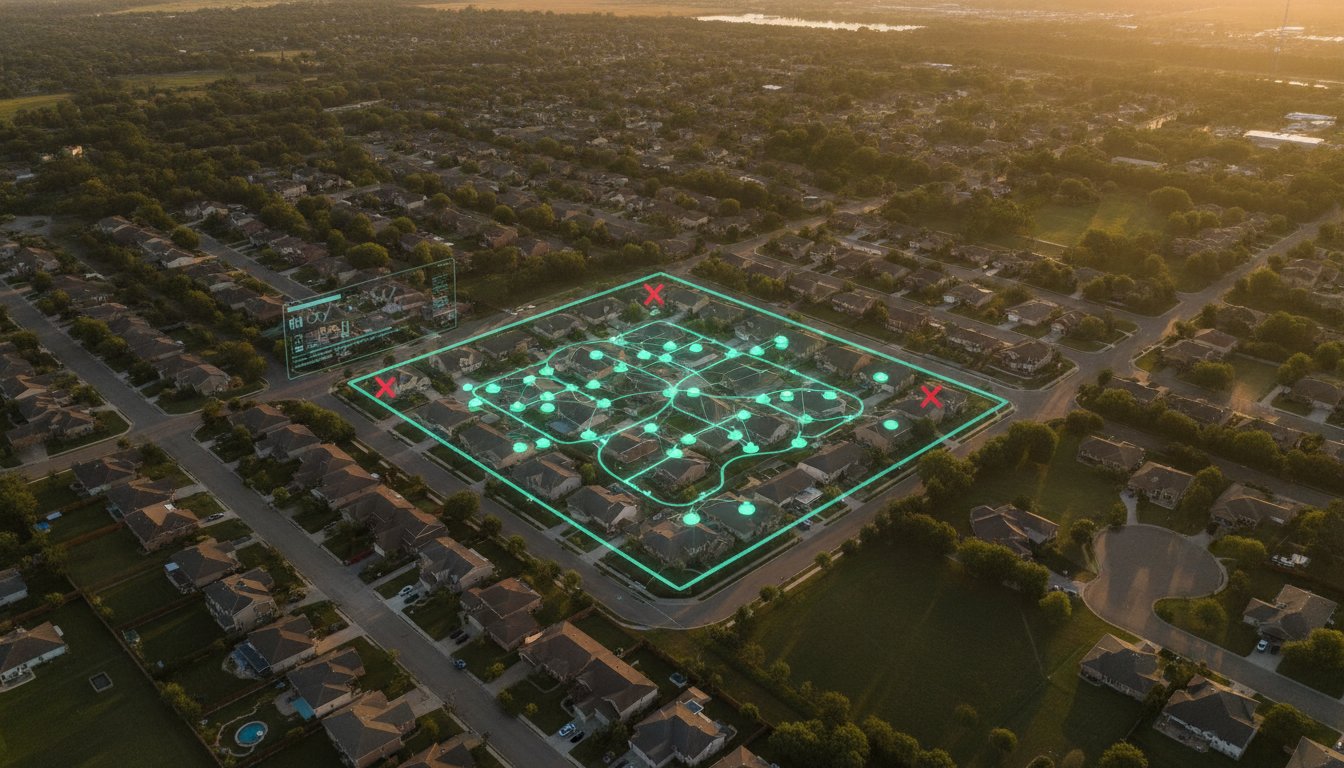
Most contractors think they're buying growth when they're actually buying a logistical nightmare. It's a common trap. You see a list of names and addresses and think "instant revenue." If those stops are ten miles apart, you're just burning fuel and killing your equipment. Buying lawn care contracts should be a tactical strike to tighten your existing routes. You already know that every minute spent behind the wheel is a minute you aren't billing. You want density. You don't want a longer list of names that drains your resources.
You don't have to overpay for low-margin accounts or risk your reputation on "ghost" lists that vanish after the first invoice. This guide will show you how to acquire contracts that increase your profit margins rather than just adding to your overhead. We'll break down the math of route density, the red flags of a bad deal, and the logistics of scaling your fleet to handle a sudden influx of work. Stop guessing. Start building a stable, recurring revenue stream that stays where it belongs: in your bank account.
Key Takeaways
- Acquisition is a tactical shortcut to 2026 profitability that beats the slow, expensive grind of organic marketing.
- Verify every dollar with a 12-month revenue audit because buying lawn care contracts without proof of billing is a liability.
- Prioritize geographic clustering to ensure new accounts increase route density rather than adding travel time and fuel waste.
- Price deals based on EBITDA and profit margins to avoid the trap of buying high-revenue accounts with zero bottom-line value.
- Trade your high-cost outlier stops for accounts that fit your core territory to optimize your existing labor and fuel spend.
The Strategic Logic of Buying Lawn Care Contracts
Buying lawn care contracts isn't a marketing move. It's a logistical takeover. Most owners think growth means more trucks and more names on a spreadsheet. They're wrong. If those names are scattered across three counties, you're not growing; you're bleeding. You're paying for fuel, wear and tear, and idle labor. Real growth happens when you own a neighborhood. You want to dominate a cul-de-sac, not a zip code. Buying lawn care contracts should be viewed as an investment in market share, not just a list of random addresses.
Dominating a specific area allows you to build stronger relationships with homeowners who value property safety; if you're exploring ways to support clients with accessibility needs, visit Indiana Home Safety & Mobility.
In the current lawn care industry, the competition for high-value accounts is fierce. Waiting for the phone to ring is a losing strategy for 2026. Organic growth takes months of lead nurturing and expensive ad spend. Acquisition takes a single signature. It's the fastest path to scaling because it replaces "potential" revenue with "contracted" revenue. But you have to be smart. More revenue often leads to lower margins if the logistics don't line up. This is the growth trap. If you buy a $100k portfolio that requires two hours of driving between every stop, you've just bought a debt.
Why Acquisition Beats Organic Lead Gen
Organic lead generation has a massive lag time. You spend money on ads today, and you might see a return in six months. When you buy an existing route, you eliminate the Customer Acquisition Cost (CAC) delay. You're stepping into established turf with known service histories. You know exactly what the client pays and what the yard requires. It's also a defensive play. Every contract you buy is one your competitor can't touch. You're effectively blocking them from specific commercial parks or high-end residential blocks.
The Hidden Costs of Bad Acquisitions
Bad acquisitions come with a "windshield time" tax. If the new accounts are outliers, your labor efficiency plummets. Your crews spend more time looking through a glass window than they do behind a mower. You also need to consider equipment strain. If you buy a route full of half-acre lots but your fleet is built for five-acre commercial sites, you're going to struggle. Route density is the ratio of billable hours to drive time. If that ratio drops, your profit vanishes. Don't buy a headache. Buy a route that fits your current operation or one that justifies a new, dedicated hub.
Due Diligence: Auditing Revenue Stability and Route Fit
Don't take a seller's word for it. In this industry, a client list is just a piece of paper until you verify the cash flow. When you're buying lawn care contracts, you aren't just buying revenue. You're buying a history of service and a geographic footprint. If that footprint doesn't overlap with your existing operation, you're making a mistake. You need a 12-month trailing revenue audit. This means looking at bank deposits, not just a spreadsheet. Invoices can be faked; bank statements tell the truth. If the numbers don't match the reality on the ground, walk away from the deal. While you verify the billing, don't forget to verify the physical properties; for acquisitions in Central Indiana, 5M Inspection Services can provide the residential inspection expertise needed to identify any hidden property issues that might impact your service costs.
A proper Due Diligence process is your only defense against a bad deal. You need to know which clients are loyal and which ones are looking for an excuse to leave. High churn rates after a handoff are common. You can mitigate this risk by reviewing Service Level Agreements (SLAs) for commercial accounts and checking the payment history of residential ones. Are they "paying" clients or just "active" ones that you'll have to chase for money every month? Bad debt is a liability you don't need to acquire.
Geography is everything. Map every new account against your current lawn care route density. If the new stops are clustered near your existing routes, your profit per hour will skyrocket. If they're five miles out of the way, they're outliers. Outliers kill margins. You're better off trading those accounts on a specialized platform than trying to service them yourself. Tight routes are profitable routes. Scattered routes are just a way to burn fuel and waste labor.
The 5-Step Audit Checklist
Start by verifying the money. Look for late payments or long payment cycles. Next, inspect the properties. Site conditions matter. Are the hills too steep for your current mowers? Finally, review the contract terms. You want auto-renewing agreements. Month-to-month accounts are volatile. If you're unsure about a deal, you can always browse verified listings on the Mowing Route Density marketplace to see how other routes compare in your area.
Assessing Equipment Compatibility
New accounts might require a walk behind mower rental if your zero-turns won't fit through backyard gates. Small obstacles like narrow gates, low-hanging trees, or decorative fencing can add ten minutes to a stop. That's ten minutes of lost billable time every single week. Calculate the fuel impact too. Adding twenty new stops sounds great until you realize your trucks are spending an extra hour in traffic every day. Efficiency isn't just about speed. It's about having the right tools for the right terrain.
Commercial vs. Residential Contracts: Assessing Risk Profiles
Not all revenue is created equal. A residential account is often just a handshake; a commercial account is a legal fortress. When you're buying lawn care contracts, you're essentially buying a risk profile. Residential accounts offer a low barrier to entry and high volume, but they're volatile. One bad rain delay or a perceived slight can lead to a canceled service. Commercial contracts provide the stability your bank likes to see, but they come with strict performance requirements and longer payment cycles. You have to decide which headache you're willing to manage.
For most contractors, the "Portfolio Mix" is the key to long-term survival. Aim for a 70/30 split. Having 70% of your revenue tied to stable commercial maintenance provides a floor for your overhead. The remaining 30% in high-density residential accounts allows you to maximize profit in specific neighborhoods without becoming overly reliant on a single property manager. This balance protects your cash flow while allowing you to exploit the logistical efficiency of tight routes. If a deal is weighted too heavily in one direction, adjust your offer accordingly.
Valuing Commercial Service Agreements
Commercial accounts are built on multi-year terms. You need to scrutinize these agreements before closing the deal. Look specifically for an "Assignability" clause. If the contract doesn't allow for a transfer of ownership, you're buying nothing. You also need to factor in the cash flow lag. Net-30 or even net-60 payment terms are standard in the commercial world. If your business isn't liquid enough to cover labor and fuel for two months without a check, a large commercial acquisition could actually sink you. Use a solid Valuation Framework to ensure the purchase price accounts for these capital delays.
Mitigating Residential Churn
Residential acquisitions live or die in the first 30 days. This is the "Introductory Period" where you prove you aren't a downgrade from the previous guy. If the seller had "handshake deals" with no written terms, get them on paper immediately. Standardize your pricing during the handoff. Sellers often undercharge their oldest clients out of habit or friendship. You can't afford to inherit their charity cases. If you find yourself with scattered residential stops that don't fit your new route map, don't try to force them. Use a lawn account trading platform to swap those outliers for accounts that sit right on your existing path. Optimization is a choice; waste is a habit.

Valuation Framework: Pricing Contracts for Real-World Profit
Top-line revenue is a vanity metric. If you buy a $500,000 portfolio that costs $510,000 to service, you haven't bought a business. You've bought a full-time job that pays you in stress. When buying lawn care contracts, you must value the deal based on what hits the bank account after the crews are paid and the fuel tanks are full. The standard industry multiplier usually sits between 0.5x and 1.2x annual revenue. Where you land on that scale depends entirely on the quality of the data. High-churn residential routes sit at the bottom. Long-term commercial contracts with high margins sit at the top.
Profit matters more than gross sales. Sophisticated buyers in 2026 are looking at multiples of 4.5x to 6.5x EBITDA for commercial maintenance firms. For smaller, owner-operated residential routes, the market often dictates 2.5x to 4.0x Seller’s Discretionary Earnings (SDE). You should also apply a "Density Premium." If a set of accounts is literally next door to your current stops, they're worth more to you than anyone else. Why? Because your incremental cost to service them is near zero. You're already in the neighborhood. Every dollar from that new stop is pure margin.
Calculating the Real Value
Use a clinical formula to find your walk-away price: (Annual Revenue x Multiplier) minus (Estimated Churn Risk). You must also discount for the "Equipment Gap." If these new accounts require specialized gear you don't own, that capital expenditure comes out of the purchase price. You can use a commercial lawn mower lease to preserve your cash reserves during the buyout phase while still getting the deck width you need for the new properties. Don't let a lack of fleet capacity kill a high-density deal.
Negotiation Tactics for Buyers
Never pay 100% upfront. It's a rookie mistake that leaves you with zero leverage. Use seller financing for at least 30% of the deal. This keeps the seller "in the game" and ensures a smooth handoff. You also need a "Clawback" or "Holdback" clause. If 20% of the clients cancel within the first 90 days, you shouldn't be on the hook for their full valuation. The seller gets a refund on the purchase price for every account that walks. Finally, leverage route inefficiency. If the seller’s routes are a mess of "windshield time," use that wasted labor cost as a reason to lower the asking price. You're the one who has to fix their operational failure. If you're ready to find deals that actually fit your map, you can browse verified contracts on the Mowing Route Density marketplace today.
Scaling via the Mowing Route Density Marketplace
Scaling isn't about owning more trailers. It's about owning more billable hours in a smaller radius. The Mowing Route Density marketplace simplifies the process of buying lawn care contracts by connecting you with sellers who have already done the legwork. You don't have to hunt for leads. You just have to look at the map. If a route doesn't fit your core territory, don't walk away from the deal. Buy the whole portfolio, keep the densest clusters, and trade the outliers. Swapping high-cost stops for ones that sit on your existing path is the ultimate operational win. It turns a logistical mess into a streamlined profit center.
Sometimes a major acquisition creates a sudden spike in workload that your current fleet can't handle. This is "Burst Growth." Don't rush into a five-year equipment loan for a three-month seasonal peak. Use commercial mower rentals to bridge the gap. It keeps your balance sheet clean while you integrate the new accounts. If you find yourself overextended in a new area, use the lawn mowing service provider locator to find local partners. Subcontracting the outliers until you can trade them or build a dedicated route is a smart way to maintain service levels without killing your crews. You stay profitable while you optimize.
The Asset-Light Growth Model
Traditional scaling is a capital trap. You buy a route, then you buy a truck, then you buy a zero-turn. By the time you're done, your profit is tied up in depreciating machinery. The asset-light model flips the script. Focus your capital on account acquisition. Rent the equipment only when the volume justifies the expense. This approach keeps you agile. You can scale up for a large commercial contract today and scale back when the season ends. It's about maximizing cash flow, not collecting iron. Stop paying interest on machines that sit idle half the year.
Executing the Handoff
A client list is a raw material. You have to refine it into a profit engine. Start with professional communication. Use templates that introduce your team and explain the transition without causing panic. Churn happens when clients feel like a number. Map the new routes for your crews before the first visit. They should know every gate location and obstacle before they even park the truck. Familiarity breeds speed. Speed breeds margin. Turn that list of names into a high-density route that runs like a machine. If you manage the handoff with clinical precision, you'll keep the revenue and lose the waste.
Turn Your Service Area into a Profit Engine
Efficiency isn't a goal; it's a requirement for survival. You've seen the math. Scattered accounts aren't assets. They're liabilities that eat your fuel and kill your crews. Buying lawn care contracts is a tactical maneuver to tighten your territory and eliminate the waste of "windshield time." Focus on high-density clusters. Audit every dollar of trailing revenue. Never pay for a list of names that doesn't improve your billable-hour ratio. If an account doesn't fit your map, it doesn't belong on your schedule.
Scaling doesn't have to mean drowning in equipment debt. Use strategic acquisitions to block competitors and secure your market share. When the workload spikes, lean on rentals to maintain your margins without the long-term overhead. You now have the framework to value deals, mitigate churn, and execute a flawless handoff. It's time to stop guessing and start optimizing. Scale your route density today: browse the Mowing Route Density marketplace. We provide a B2B-only marketplace for serious contractors, flexible commercial mower rentals, and strategic route optimization tools. Build a business that works as hard as you do.
Frequently Asked Questions
How much should I pay for a lawn care contract in 2026?
Most buyers pay between 0.5x and 1.2x annual revenue for a portfolio. If you're looking at an owner-operated residential business, expect a multiplier of 2.5x to 4.0x Seller's Discretionary Earnings (SDE). Commercial maintenance businesses with high recurring revenue command 4.5x to 6.5x EBITDA. Always adjust based on route density. If the stops are miles apart, the value drops significantly.
What is a 'clawback' clause in a lawn care account purchase?
A clawback clause is a legal safeguard that triggers a refund if an acquired client cancels within a specific window. Most buyers use a 90-day period. If a customer leaves before the deadline, the seller pays back the portion of the purchase price attributed to that account. It protects you from buying "ghost" accounts that the seller knew were already planning to leave.
Is it better to buy commercial or residential lawn care routes?
Commercial routes offer stability and long-term contracts, but they have longer payment cycles. Residential routes provide instant cash flow and high volume, but they carry a higher risk of churn. A 70/30 split is the sweet spot for most contractors. Focus on whatever increases your route density. A residential cluster in one neighborhood is more profitable than three scattered commercial sites.
How do I verify the revenue of a lawn care business I'm buying?
Never trust a seller's spreadsheet alone. Demand a 12-month trailing revenue audit backed by bank statements and tax filings. Match the deposits to the invoices. If the numbers don't line up, the revenue isn't real. You're buying lawn care contracts to build wealth, not to inherit someone else's accounting errors or bad debt.
What happens to the contracts if the seller tries to compete with me?
You must include a non-compete clause in your purchase agreement. This prevents the seller from opening a new shop and poaching your newly acquired clients. Most non-competes cover a specific radius and a set number of years. Without this protection, you're just paying the seller to fund their next competing venture. Verify the local laws regarding non-compete enforceability in your state.
Can I buy just a portion of someone's lawn care route?
You can and should buy just a portion of a route if that's what fits your map. This is a tactical density play. Many sellers are willing to offload "outlier" accounts that are too far from their main hub. Buying these specific stops allows you to tighten your own routes without the overhead of managing a massive, unoptimized portfolio. It's the fastest way to grow without adding travel time.
How do I handle equipment needs when I suddenly double my accounts?
Use rentals to bridge the gap during a sudden expansion. Buying new trucks and mowers immediately after a buyout kills your liquidity. Commercial mower rentals allow you to handle the new workload without long-term debt. Once the revenue from the new contracts stabilizes, you can decide whether to lease or buy permanent assets for the fleet. Don't let equipment debt outpace your actual profit.
What is an assignability clause and why do I need it?
An assignability clause gives the seller permission to transfer the contract to a new owner. Without this clause, many commercial contracts become void the moment the business changes hands. You need to verify this language in every agreement before you sign the check. If the client isn't legally bound to stay with the new owner, you aren't buying an asset. You're buying a gamble.


