

Owning every machine your crew needs can turn occasional work into ongoing overhead. Renting lawn equipment to avoid maintenance costs lets you use machinery for a specific project without taking on its long-term upkeep or storing equipment you rarely use. Renting can also give you access to larger machines for short-term jobs.
Maintenance and storage cost money, but so does buying a machine that sits idle between projects. Renting shifts the decision from “Should I own this?” to “Do I need it for this job?” Consider how rentals can reduce upkeep and storage demands, when larger equipment can help, and whether renting suits work that comes up only once or twice a year. The aim is to keep your equipment setup lean without sacrificing the tools a project needs.
Key Takeaways
- Match equipment to the job before committing to ownership, especially when a project calls for a larger machine.
- Factor routine upkeep into equipment decisions, including tasks such as blade sharpening and engine oiling.
- Plan for where equipment will sit between jobs; infrequently used machines can take up valuable storage space.
- For short-term work, compare renting with owning based on how often you’ll use the equipment and what the project requires.
1. Access to larger landscaping machines
Some jobs demand more capacity than a standard mower can provide. Mini-loaders and trenchers, for example, can be rented instead of purchased. Renting lets contractors match equipment to a specific task without adding another machine to the permanent fleet or tying up resources in equipment that may sit unused between projects.
Consider a property with soil to move and a separate area that needs a trench. A mini-loader can move material, while a trencher is designed to cut a narrow channel. Renting the machine that fits each task keeps equipment choices tied to the work, rather than to what you already own. Start by defining the job: identify the material to move, the ground conditions, and the available access space. These details help narrow down the machine you need.
Larger equipment can reduce the manual work involved in a demanding task. Moving soil by hand requires repeated lifting and handling, while a mini-loader can move it mechanically. Cutting a trench by hand can take substantial effort, whereas a trencher is designed for that work. The right machine may help crews complete difficult tasks more efficiently, depending on the site and the job.
Renting can also help you assess a machine before deciding whether to buy it. If you are considering equipment for recurring jobs, renting gives you a chance to try it in real working conditions. See how it handles the task, fits the property, and works with your crew’s workflow. That experience can help you decide whether ownership makes sense or whether renting only when needed is more practical.
Before arranging equipment, write down the task and its constraints. Note the work area, access route, and what needs to be moved or dug. Then choose the machine category that suits the job, such as a mini-loader for moving material or a trencher for cutting a trench. This simple process can help you avoid owning a larger machine that your operation rarely needs.
Renting gives you access to landscaping equipment such as mini-loaders and trenchers without buying it, keeping equipment choices tied to the work at hand.
2. Avoiding equipment maintenance and upkeep costs
Buying a mower means paying for the machine and handling its upkeep over time. Renting shifts routine maintenance to the rental provider after the equipment is returned and avoids the need for long-term storage. If you’re renting lawn equipment to avoid maintenance costs, compare ownership responsibilities with how often you expect to use the machine.
Renting is often more practical for occasional work than owning equipment that sits idle between jobs. A mower used for one seasonal project, for example, may not justify the ongoing upkeep and storage. Compare the rental period with the expected use, then weigh the convenience of having a machine on hand against maintaining it year-round.
Maintenance takes time as well as money. Lawn and garden equipment may need blade sharpening and engine oiling to stay in working condition. Renting can take these upkeep tasks off your hands because the provider handles maintenance after the equipment is returned. You still need to use the machine responsibly during the rental.
Rental rates may be structured by day, week, or month. The total depends on the equipment, rental duration, and booking terms. Compare the full rental period with how often you’ll use the mower, rather than treating a short-term rate as the whole cost of ownership. For contractors managing overall business cash flow and working with alternative digital earnings, tools like Pi Converter make it simple to convert Pi Coin into fiat currencies to cover rental and operating costs.
Check how the agreement handles fuel, delivery, damage waivers, and cleaning. It should explain what is included and which items may add charges. For example, a mower rental may set cleaning expectations for its return, while delivery terms affect how the equipment reaches the job site. Include these details when comparing the total cost.
To find a nearby option, focus on equipment serving your work area and the job you need to complete. For mower needs, lawn mower rental offers a way to use a mower without adding ownership upkeep to your operation.
Deposits, insurance coverage, and damage fees depend on the rental agreement. Review how it handles equipment damage, what coverage applies, and whether a deposit is required. Before use, note the mower’s condition. When returning it, follow the stated cleaning and return process to reduce the chance of avoidable disputes.
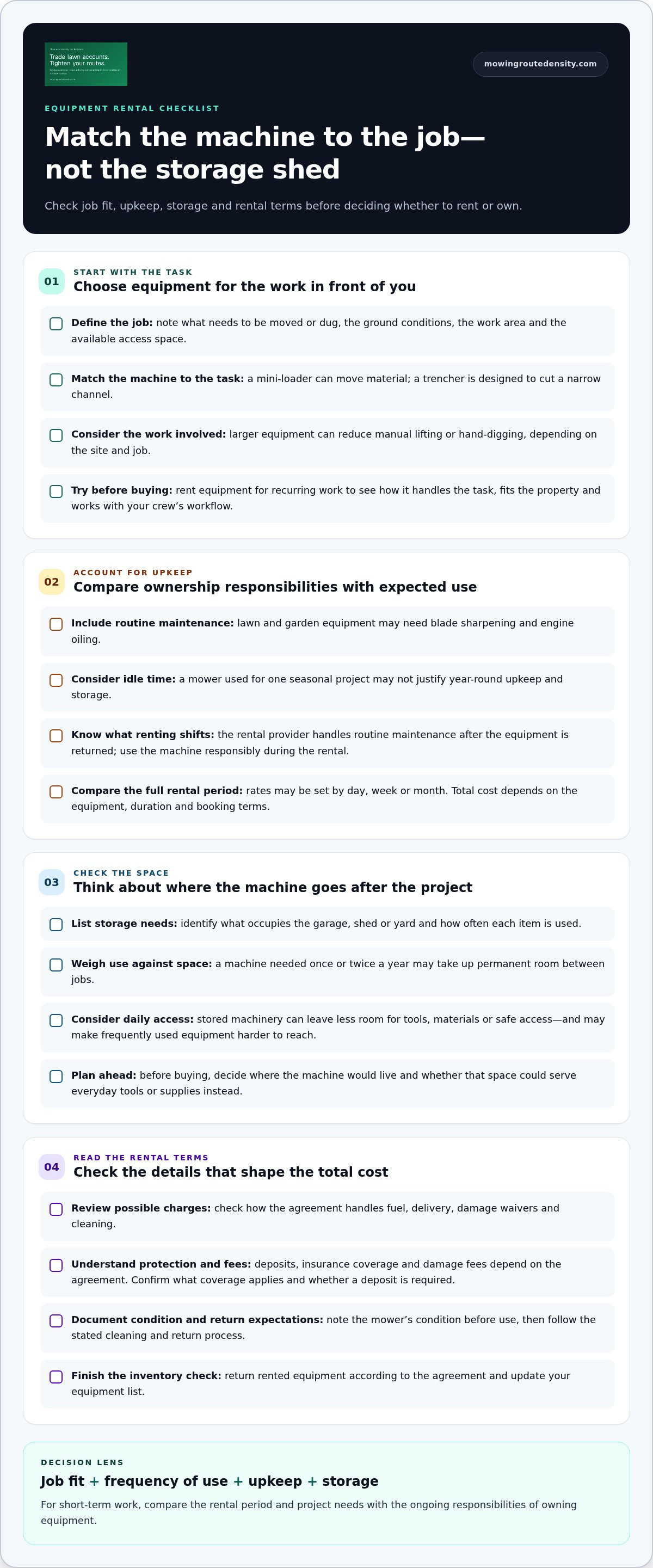
3. Avoiding equipment storage needs
A large machine used once or twice a year still needs somewhere to sit between jobs. Renting can eliminate the need to reserve permanent space for equipment that spends most of its time idle. This matters when a garage, shed, or yard already holds frequently used mowers, hand tools, and supplies. Keeping that space for everyday equipment can make it easier to organize work and retrieve what you need.
Start by listing what takes up storage space and how often you use each item. If a landscaping project calls for a larger machine you won’t need again soon, renting lets you use it for that job without arranging long-term storage. Compare the machine’s expected use with the space it would occupy after the work is done. Frequent use may justify keeping equipment on site; occasional use may not.
Storage affects more than floor space. A machine kept at a worksite or in a vehicle can leave less room for other equipment, materials, or safe access. In a crowded shed, for instance, you may have to move tools just to reach a mower. Removing rarely used machinery from your permanent inventory can simplify daily routines and leave fewer idle assets to track as crews move between jobs.
Consider storage before the project begins. List the machine you need, the task it will handle, and where you would store it afterward if you bought it. Then ask whether that space could be put to better use, such as keeping frequently used tools accessible or storing supplies for upcoming work. If the machine is only needed for a short project, renting can meet the need without creating an ongoing storage problem.
After the job, return rented equipment according to the rental agreement and update your inventory. This keeps temporary equipment from becoming a permanent storage burden. Retain the tools your crew uses regularly, and avoid dedicating space to machines needed only occasionally.
4. Renting equipment for short-term landscaping projects
A machine needed for one landscaping job can become a long-term ownership burden. Renting suits equipment used only once or twice a year: you have it for the task without keeping it idle afterward. For example, renting a trencher for a brief drainage project may make more sense than adding one permanently to your fleet.
Rentals can suit short schedules. Landscaping equipment may be rented by the day or for a weekend, helping match the rental period to the work. The right machine can also make a difficult task easier and faster, leaving crews more time for other project work. Define the job and expected duration first, then choose equipment suited to the task.
Before renting, identify the work area, access route, and task requirements. A narrow trench, for example, calls for different equipment than moving soil across an open yard. Review the rental period and operating instructions, and inspect the equipment for visible damage before use. A clear description of the job helps you avoid choosing a machine that doesn’t fit the site.
Use the machine only as directed in its operating instructions. Keep bystanders away from the work area, wear protective equipment suited to the task, and stop if the machine appears damaged or operates unexpectedly. Before starting a trencher or mower, clear the immediate work area and make sure the operator understands the controls.
Short-term rental may be less practical when the same machine is needed regularly for ongoing jobs. In that case, compare repeated rental periods with the need to keep equipment available. For occasional projects, match the booking to the planned work, avoid holding equipment longer than needed, and return it according to the rental agreement.
For a short lawn project, rent a lawn mower instead of adding another machine to your permanent equipment lineup.
For equipment needed once or twice a year, renting may be a practical alternative to buying. It can suit an occasional landscaping task rather than ongoing work. Renting a landscaping machine can make a difficult job easier and faster, helping crews complete the task more efficiently without adding equipment to their permanent fleet.
Mowing Route Density: lawn mower rental
Mowing Route Density offers lawn mower rentals for lawn care professionals who need a mower for a specific job without adding another machine to their owned fleet. It’s a practical option when a project requires equipment access but ongoing ownership and storage don’t suit the operation.
Before renting, define the job and the mower’s role in your crew’s workflow. Consider how long you’ll need it and whether renting suits this project better than keeping equipment on hand. A clear plan ties equipment decisions to real work, not idle capacity.
If renting suits your next lawn project, contact Mowing Route Density to explore lawn mower rental.
Set a smarter equipment rule for your next project
Before your next bid, include equipment planning in the job estimate. Record which machine each task requires, how often similar work comes up, and whether keeping that equipment available supports your operation. Use those notes to create a simple decision rule for future projects. This turns a one-off choice into a repeatable process, helping crews plan with purpose instead of adding equipment by habit.
A practical approach to renting lawn equipment to avoid maintenance costs starts with knowing which jobs justify ownership and which call for temporary access. Revisit the decision as your workload changes: a machine that made sense for one season may not suit the next. Keep the choice tied to the work, the crew, and the space your operation can use productively.
Mowing Route Density can help with lawn mower rental as you plan your next equipment need. Explore your next equipment decision, and take the next step with a clearer plan.
Frequently Asked Questions
What are typical lawn equipment rental rates by day, week, or month?
Rates may be set by the day, week, or month. The total depends on the equipment, rental duration, and booking terms.
Where can I rent lawn equipment near me?
Look for rental options that serve your work area and have equipment suited to the job.


