

Removing a lawn by hand takes time and effort. A sod cutter slices beneath the grass and roots, lifting turf in strips for removal or relocation. A professional sod cutter rental service can be useful when the area is too large to clear efficiently by hand.
Choosing a machine involves more than cutting width. Its size and weight affect transport, maneuverability, and movement across the lawn. A poor fit can slow the job before cutting begins.
This guide explains what sod cutters do, how manual, gas-powered, and battery-powered models suit different projects, and how machine dimensions shape your rental decision. You’ll also learn what to prepare before cutting, from planning the work area to handling and transporting the equipment. A little planning helps keep the job focused, the equipment manageable, and the turf removal on track.
Key Takeaways
- Compare a machine’s footprint and weight with your transport setup and the space you need to move through.
- Match the cutter type to the project area and soil conditions to avoid wasting effort on the wrong equipment.
- Plan the work area, transport, and safe operation before rental day so the cutting job can start smoothly.
- Review rental terms, including requirements, deposit, and insurance, before committing to the equipment.
Machine dimensions and weight
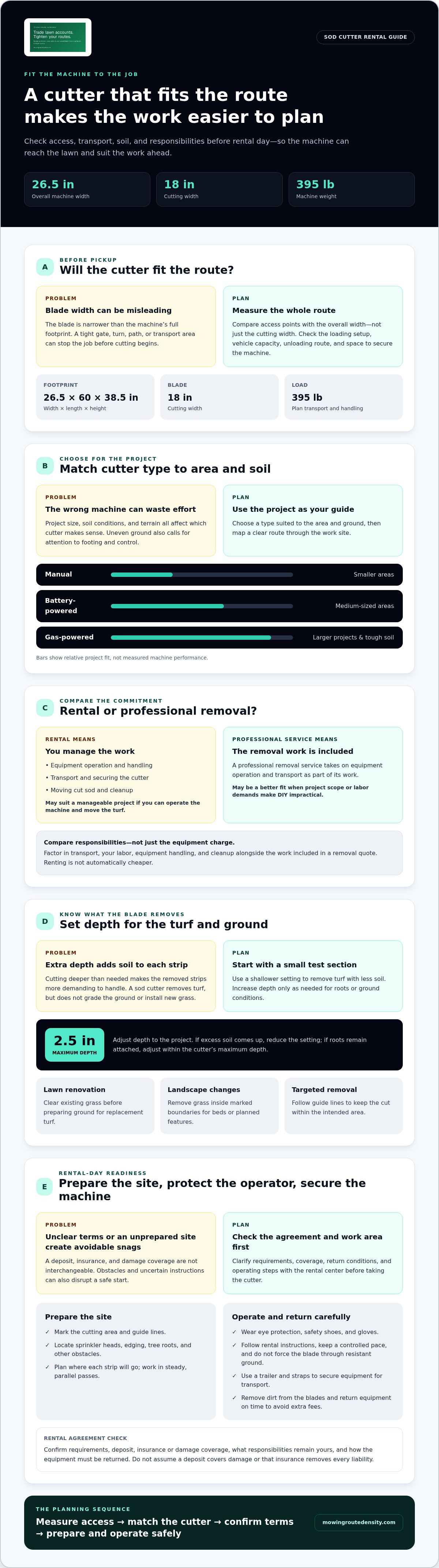
A sod cutter’s footprint affects more than storage. It determines whether the machine fits through gates, along paths, and into your transport setup. One rental sod cutter measures 26.5 inches wide, 60 inches long, and 38.5 inches high. Measure narrow access points and the transport area before arranging pickup.
Cutting width determines how many passes a job takes. A wider blade covers more ground per pass, while a narrower machine may fit a confined work area. The machine’s full footprint matters too.
- Access: Measure gates, paths, and turns against the machine’s overall width.
- Transport: Compare the 395-pound machine weight with your vehicle and loading setup.
- Storage: Allow for the full 60-inch length and 38.5-inch height.
Don’t confuse cutting width with overall machine width. The rental example’s 26.5-inch overall width exceeds its 18-inch cutting width. That difference matters when planning a route between the unloading point and the lawn. A tight gate can stop the job before cutting begins, even if the blade width seems suitable.
Weight affects transport and maneuvering. Check your vehicle’s capacity, plan how to secure the machine, and map out the unloading route before pickup. Don’t assume a machine will fit just because its cutting width is narrower than an opening.
Measure the project’s narrowest access point first. Compare that space with the machine’s overall width, not just its blade width. Match the machine’s dimensions and weight to the access route, transport method, and work area. This helps ensure the sod cutter can reach the lawn and move through the site.
Preparing to rent a sod cutter
Choose a machine that suits the lawn, soil, and access route, then plan for transport and safe operation. Rental centers can help you select equipment and explain how to use it.
Comparing Rental With Professional Removal
Renting isn’t automatically cheaper than hiring a professional sod removal service. Compare the total rental commitment with the work included in a removal quote, factoring in transport, your labor, equipment handling, and cleanup. Renting may suit a manageable job if you can operate the machine and move the cut sod. A professional service may be a better fit when the project’s scope or labor demands make doing it yourself impractical.
Compare responsibilities, not just the equipment charge. With a rental, you handle operation and transport. A professional removal service takes those tasks on as part of its work.
Rental Requirements and Coverage
The rental agreement sets out requirements, deposits, and insurance terms. Read it before committing. Distinguish the deposit from any insurance or damage coverage, and check what each applies to, what responsibilities remain yours, and how the equipment must be returned. Don’t assume a deposit covers damage or that insurance eliminates every liability.
Keep the agreement and operating instructions available during the job. Ask the rental center to explain unfamiliar terms, equipment requirements, and operating steps before taking the sod cutter. This helps clarify your responsibilities without guessing about amounts or coverage.
Matching the Cutter and Operating It Safely
Match the machine to the area and soil: manual cutters suit smaller areas, gas-powered cutters suit larger projects and tough soil, and battery-powered cutters suit medium-sized areas. On uneven terrain, consider footing and control when planning your route. Mark the cutting area and clear obstacles before starting.
Wear eye protection, safety shoes, and gloves while operating. Follow the rental center’s instructions, keep a controlled pace, and avoid forcing the blade through resistant ground. For transport, use a trailer and secure the equipment with straps to prevent movement. After cutting, remove dirt from the blades and return the equipment on time to avoid extra fees. If lawn maintenance follows the removal project, lawn mower rental can support that next task.
Sod cutter purpose and uses
A sod cutter separates grass and roots from the ground by slicing horizontally beneath the surface. It lifts turf in strips, rather than leaving uneven chunks as hand digging can. This makes it useful for replacing an established lawn, clearing grass for a planting bed, or opening a defined area for landscaping. A professional sod cutter rental service can make sense when the area is too large to remove efficiently by hand.
Cutting depth shapes what the blade removes. A rental sod cutter can cut to a maximum depth of 2.5 inches, and adjustable depth helps match the cut to the project. Use a shallower setting to remove turf with less soil. Increase depth only as needed for roots or ground conditions. A deeper cut adds soil to each strip, making removal more demanding.
Choose a machine with the finished space in mind. For a garden bed, mark the boundary and remove the turf cleanly. For lawn replacement, consistent passes leave a more even surface to prepare. A sod cutter removes turf, but it doesn’t grade the ground or install new grass. Renting a professional sod cutter may suit projects where controlled strip removal is the main task, with follow-up work handled separately.
- Lawn renovation: Clear existing grass before preparing ground for replacement turf.
- Landscape changes: Remove grass inside marked boundaries for beds or planned features.
- Targeted removal: Follow guide lines to keep the cut within the intended area.
Before starting, mark edges and locate obstacles such as sprinkler heads, edging, and tree roots. Test the selected depth in a small section. If the blade lifts excess soil, reduce the setting; if roots remain attached, adjust within the machine’s 2.5-inch maximum. Work in steady, parallel passes, and decide where each strip will go. This makes removal a controlled first step, leaving grading and soil preparation for the next phase.
An adjustable cutting depth can accommodate different projects, allowing the operator to choose a setting suited to the intended turf removal.
What are the rental requirements, deposit, and insurance rules for sod cutters?
The rental agreement sets the requirements for collecting, using, and returning a sod cutter. It also explains whether a deposit applies and what insurance or damage coverage means for your rental. Read the terms before pickup, not while the equipment is waiting on the trailer.
Review the agreement in three parts: renter requirements, deposit conditions, and coverage. Note what identification or payment details the rental center requires, how the deposit is handled, and what responsibilities remain yours if the equipment is damaged. Don’t mistake a deposit for insurance. They serve different purposes, as defined in the contract.
- Requirements: Record what you must provide and who is authorized to operate or collect the machine.
- Deposit: Find the conditions for its return, including equipment condition and timely return.
- Coverage: Identify what the policy covers, exclusions, and your responsibility for damage or loss.
Before signing, ask the rental center to explain any clause you can’t interpret. Rental centers can also help you select equipment and understand operating instructions. Keep the written agreement and instructions available during the job. If someone else will pick up or operate the machine, make sure their role complies with the agreement.
Plan transport according to the rental instructions. Use a trailer and straps to secure the sod cutter and prevent it from moving. On return, clean dirt from the blades and bring the equipment back on time to avoid extra fees. Photos taken at pickup and return can help document the machine’s condition, but they don’t replace the contract or coverage terms.
For lawn-care professionals, rental terms matter alongside equipment fit and job logistics. If your next task is maintaining equipment for mowing work, explore lawn mower rental as a separate equipment option. Keep the sod cutter agreement specific to sod cutting, and plan each rental around its stated requirements, coverage, and return conditions.
Mowing Route Density: lawn mower rental
Mowing Route Density helps lawn-care professionals move from turf removal to ongoing mowing work with lawn mower rentals. Sod cutting clears turf, while mowing equipment supports upkeep once remaining grass or a replacement lawn needs routine care.
For professionals managing service routes, Mowing Route Density’s lawn account trading platform lets contractors buy, sell, or swap routes. People looking for a mowing company can use its service provider locator to connect with professional lawn mowing companies in their area.
These offerings serve different needs: rent mowing equipment, trade lawn accounts, or find a mowing provider. Contact Mowing Route Density to explore the option that fits your next lawn-care task.
Turn the cleared lawn into your next project
Turf removal is a starting point, not the whole plan. Decide what the space needs next, whether that’s soil preparation, new grass, or shifting your crew to other scheduled work. A professional sod cutter rental service supports the removal stage. Next, plan how to keep the project moving without losing time between tasks.
For lawn-care professionals, equipment and route decisions work best when they reflect the actual workload. Mowing Route Density supports that planning with lawn mower rentals, a lawn account trading platform, and a lawn mowing service provider locator. Choose the resource that matches your operational need instead of treating every lawn project the same way.
Ready to plan your next step? Contact Mowing Route Density today and keep your lawn-care work moving forward.
Frequently Asked Questions
What does a sod cutter do?
A sod cutter separates grass and roots from the ground in strips, making turf easier to remove. For example, it can clear a defined lawn section before it becomes a planting bed. The machine handles turf removal, not the landscaping that follows. Plan separately for moving the cut sod and preparing the exposed ground for its next use.
What preparation is needed before using a rented sod cutter?
Decide where the cut strips will go, and keep that staging area clear of the machine’s path. Walk the full route, including turns and the return path, to spot access problems before starting. Review the rental machine’s controls and operating instructions, prepare protective gear, and begin with a short test pass to see how the turf lifts.
What are common sod cutter rental fees, such as fuel, cleaning, and late-return charges?
Return the equipment on time to avoid extra fees, and clean dirt from the blades after use. Check the rental agreement for any other charges.
What alternatives are available if a professional sod cutter is unavailable nearby?
Consider a manual cutter for a smaller area, a gas-powered model for a larger project or tough soil, or a battery-powered cutter for a medium-sized area.


